
What an AC Float Switch Does and Why It Shuts Your AC Off
An AC float switch shuts the system off when water rises in the drain line or pan, helping prevent an overflow. Call Dallas 24 Hour HVAC at (469) 369-0748; we’re open 24 hours a day, seven days a week.
Need help now? (469) 369-0748
What an AC Float Switch Does When Water Builds Up
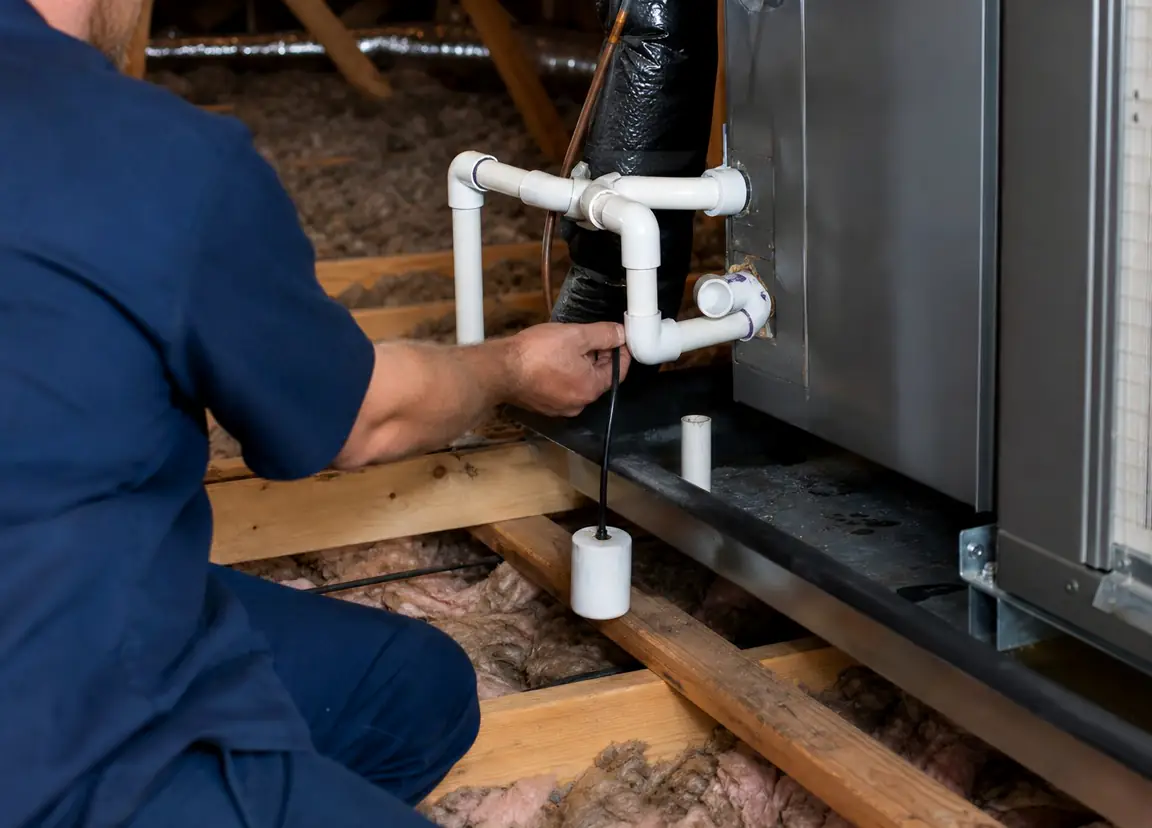
An AC float switch is a small safety device connected to the air conditioner’s condensate drain system. As the unit cools your home, moisture collects on the indoor coil and drains away. If water rises in a drain pan or a drain-line safety fitting, the float lifts and can interrupt cooling to help prevent water from spilling into the home.
The switch may be installed in a drain pan or in the condensate line, and its exact location depends on the system. Some setups shut the AC off; others may trigger a warning. That is why a sudden shutdown during cooling can point to a drain problem even when the thermostat still appears to be working.
Why an AC Float Switch Trips Instead of Letting Cooling Continue
The switch responds to rising water, not to the cause of the water buildup. A trip is a reason to check for a drainage issue rather than repeatedly restarting the air conditioner.
- A clogged condensate drain — Slime, debris, or other buildup can restrict the drain so water backs up instead of flowing out. Look for water near the indoor unit or drain pan, but don’t push tools into the pipe.
- A full or damaged drain pan — Water sitting in the pan can lift a float. Rust, cracks, or standing water are signs to stop the system and have the pan and drain checked.
- A switch or installation problem — The float may be stuck, damaged, or reacting to water in its fitting. Even without visible water, repeated shutoffs need a closer inspection rather than a bypass.
- A blockage that returns — Cooling may resume after water drains, then stop again as water backs up. For related signs and immediate precautions, see our guide to a clogged AC drain line.
Which AC Float Switch Situation Calls for Service
Use what you can see to decide what to do next, but don’t treat a reset as a repair. A float switch that keeps shutting the system off needs the underlying drainage or switch issue addressed.
Water is visible near the indoor unit
Turn cooling off at the thermostat and keep clear of wet electrical equipment. A technician should check the pan, drain route, and switch before cooling resumes.
The AC shuts off again after restarting
Stop trying to restart it. A recurring trip suggests water is still backing up or the switch is not operating correctly.
There is no visible water, but the system remains off
Don’t assume the switch is safe to bypass. The float, drain fitting, or wiring may need inspection to find why the cooling circuit is interrupted.
Need help now? (469) 369-0748
Seven Safe Checks Before You Call About an AC Float Switch
These checks help you report useful details without opening the air handler or interfering with a safety device. Stop if you find standing water close to electrical parts.
- Set the thermostat to Off — Turn cooling off at the thermostat rather than repeatedly calling for cooling. Check whether the system stops running and note any warning shown on the thermostat.
- Note when the shutdown happened — Write down whether the AC ran normally before it stopped and whether it restarted on its own. A repeating pattern can help a technician distinguish a recurring water backup from a one-time shutdown.
- Look around the indoor unit — Without removing a panel, check for water on the floor or visible water in an accessible drain pan. If you see water, keep the AC off and avoid touching wiring or wet equipment.
- Look at the visible drain outlet — If you can safely see where the condensate drain exits outdoors, note whether water is dripping or the outlet looks blocked. Don’t insert a wire, brush, or other tool into the pipe.
- Check the thermostat display — Record any message or error code before changing settings. That detail can help narrow down whether the system has stopped on a safety signal.
- Check the air filter — If the filter is easy to reach, check whether it is visibly dirty or blocked and replace it if needed. The U.S. Department of Energy says replacing or cleaning a dirty filter can lower AC energy use by 5 to 15 percent; a filter check does not clear a backed-up drain.
- Leave the float switch in place — Do not tape down, disconnect, or bypass the switch, and don’t pour chemicals into the drain. If the system will not stay on or water is present, arrange service instead of forcing cooling to run.
What Can Go Wrong When You Bypass an AC Float Switch
The switch is there to stop cooling when water reaches a point that signals a drainage problem. Bypassing it can let the system continue operating while water overflows the pan or leaks around the indoor unit. Water damage may then grow while the AC appears to be running normally.
Repeatedly resetting the thermostat can also hide the pattern without clearing the obstruction. Leave the system off if the switch trips again, if you see water, or if the unit makes a new sound after restarting. Don’t open electrical compartments or reach into the drain pan to move the float.
Why Dallas Summer Cooling Can Expose a Drain Problem
Dallas-area AC systems can run long cooling cycles in summer, giving the indoor coil more time to collect moisture that must leave through the condensate drain. The National Weather Service’s 1991–2020 normals put the normal July high at DFW Airport at about 96°F. When the system is working through sustained heat, a restricted drain may become noticeable as water backs up and the float switch stops cooling.
That weather context doesn’t identify the fault by itself. A visible leak, a switch that trips more than once, or an AC that stays off after the thermostat is set to cool still needs a system-specific check.
Need help now? (469) 369-0748
When an AC Float Switch Needs a Dallas HVAC Technician
Call for service when the switch trips again, water is present, the AC won’t restart, or you can’t tell whether the drain is clear. A technician can inspect the float switch and condensate drain together, identify whether the water is backing up, and check that the safety control works after the issue is addressed.
Dallas 24 Hour HVAC serves Dallas and towns within 40 miles, and the business is open 24/7. A condensate drain line and float switch inspection is $29; condensate drain line and float switch service starts from $69. Call (469) 369-0748 if the AC has shut down and you need the drain and switch checked.
Frequently asked questions
Can I keep running my AC after the float switch trips?
Turn cooling off if the switch trips, especially if you see water near the indoor unit. Running the system without addressing the cause can allow water to overflow or leak; don’t bypass the safety switch.
Can I reset an AC float switch myself?
Don’t force the float down, disconnect it, or tape it in place. You can turn cooling off at the thermostat and look for visible water, but a repeated trip or a switch that stays engaged needs inspection.
Why did my AC float switch trip when I can’t see water?
Water may be inside the drain pan or switch fitting, where it is not visible from outside the unit. A stuck or damaged switch can also interrupt cooling, so have the switch and drain checked instead of assuming the system is clear.
Can Dallas 24 Hour HVAC check a float switch and drain line together?
Yes. The condensate drain line and float switch service covers the related drain and safety-control concern, with an inspection priced at $29 and service starting from $69. The business serves Dallas and towns within 40 miles.
AC Shut Off After a Float Switch Trip?
Call Dallas 24 Hour HVAC at (469) 369-0748 to have the condensate drain and float switch inspected.