
AC Drain Pan: Rust, Water and Replacement
An AC drain pan with light surface rust may still work, but a cracked, heavily corroded, or overflowing pan needs attention; turn the system off if water is spreading. Call (469) 369-0748 to have us inspect the pan and trace the leak before restarting the AC.
Need help now? (469) 369-0748
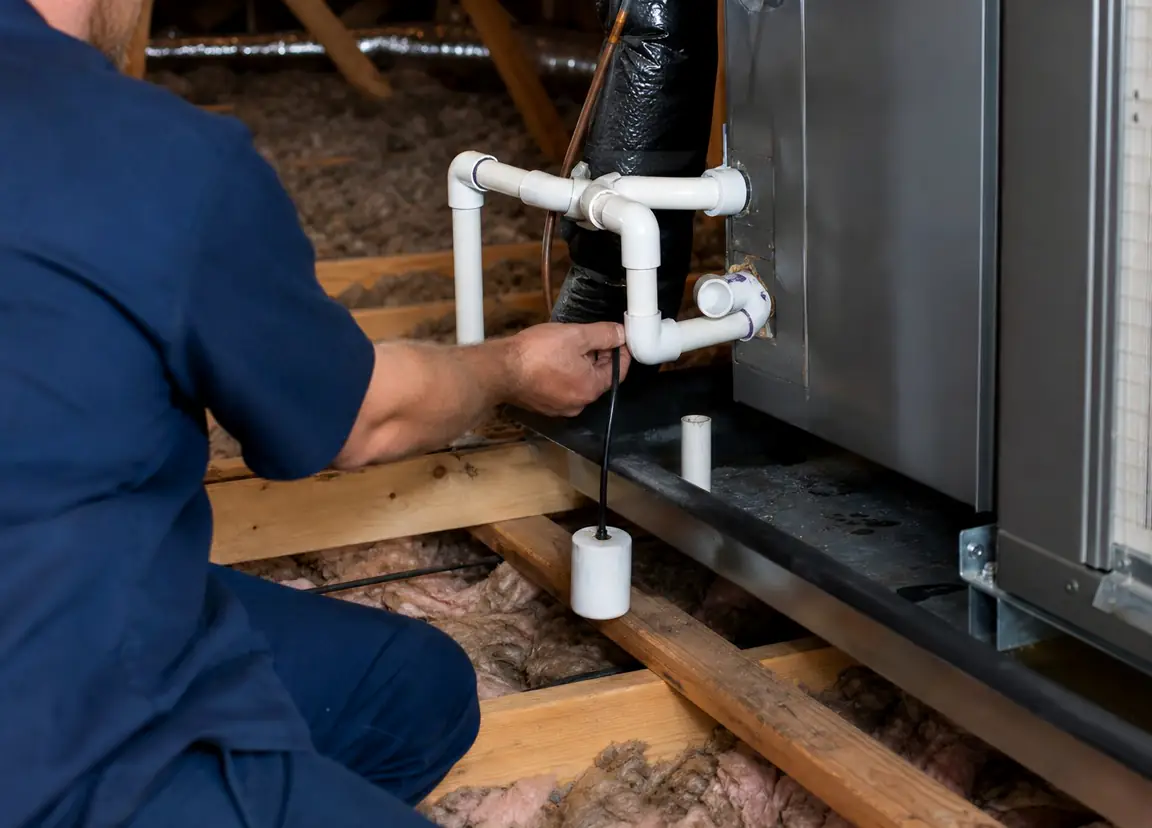
How an AC Drain Pan Handles Condensation
As your AC cools indoor air, moisture collects on the evaporator coil. The drain pan catches that water and directs it toward the condensate drain line. A working system may have a little water in its primary pan while it runs; water should not keep rising or spill onto nearby surfaces.
Many systems also have a secondary pan beneath the equipment or above a ceiling. It acts as a backup if water escapes the primary pan, so water in that secondary pan is a warning to switch off the AC and find the cause—not a reason to keep running it.
What Rust and Water in an AC Drain Pan Can Mean
Look only at parts you can see without removing a panel or reaching into the equipment. These clues can help you describe the problem, but they do not confirm the cause.
- Light surface rust, with no standing water — A small rust patch does not by itself prove the pan has failed. Note its location and watch for dampness, flaking metal, or water appearing beneath it.
- Deep rust, a hole, or a visible crack — Corrosion or a break can let water escape before it reaches the drain. Keep the AC off if water is leaking and have the pan and surrounding drain parts checked.
- Water in the primary pan that keeps rising — A blocked or restricted drain line can stop water from leaving the pan. A clogged AC drain line can look much like a damaged pan from outside.
- Water in the secondary pan or a shutoff — A full backup pan or a system that stops cooling may point to water reaching a float switch. Learn what an AC float switch does before trying to reset anything.
Seven Safe Checks Before You Touch the AC Drain Pan
These checks are for observation, not pan or drain-line repair. Do not remove sealed covers, reach near wiring, or work around standing water near electrical equipment.
- Turn the thermostat to Off — Stop the cooling cycle at the thermostat if you see water escaping the pan. Check whether the system stops; leave it off if water is still spreading.
- Keep clear of wet electrical areas — Do not step into water near the indoor unit or touch a wet switch, plug, or wire. Check from a dry, safe spot and leave the equipment untouched if water is close to electrical parts.
- Note when the water appeared — Write down whether you noticed the leak while the AC was running or after it stopped. This timing gives the technician a clue about when water is collecting or escaping.
- Look at the visible edge of the pan — Use a flashlight from outside the equipment to check for rust, a split, or standing water. Do not remove an access panel to get a better view.
- Check the area around the unit — Look for a ceiling stain, damp flooring, or water near stored belongings. Photograph any visible damage so you can show where the leak has traveled.
- Observe the drain outlet only if it is easy to see — A drain outlet may be visible outside near the equipment. Note whether it is dripping during a cooling cycle, but do not push a wire into it or pour chemicals into the line.
- Record any shutdown or warning — Note whether the AC stopped on its own or a float switch is visible in the backup pan. Do not bypass or repeatedly reset a switch; report what you saw when you request service.
Need help now? (469) 369-0748
Which AC Drain Pan Repair Fits the Signs?
The right fix depends on whether water is escaping through the pan or failing to drain away. These are different problems, even though both can leave water around the indoor unit.
Drain problem: water backs up in an intact pan
A technician can inspect the condensate drain line and float switch when the pan looks intact but water is not draining. Our condensate drain line and float switch service covers those related parts.
Pan problem: water escapes through corrosion or damage
A technician needs to check whether the pan is cracked, rusted through, or sitting out of position. Replacing a pan can depend on its access and fit, so a visible rust spot alone is not enough to choose replacement.
Unclear source: moisture appears outside the pan
Water can travel before it becomes visible, so the wettest spot may not be where the leak begins. Keep the system off if water is spreading and have the pan, drain path, and nearby equipment inspected.
What Not to Do With a Rusty or Leaking AC Drain Pan
Do not patch a pan with tape, sealant, or a household coating and assume the leak is fixed. A patch can hide damage while water continues escaping, and it does not clear a blocked drain line. Avoid pouring bleach or other cleaners into the pan or drain; chemicals can damage components and do not repair a crack.
Do not bypass a float switch to force the AC to run. That switch is there to stop cooling when water reaches a level that may cause an overflow. If the equipment has stopped after water appeared, leave it off until the cause is checked.
When an AC Drain Pan Needs an HVAC Inspection
Call an HVAC technician for a hole, deep corrosion, repeated overflow, a wet ceiling, or water near electrical components. A technician can distinguish a pan failure from a blocked condensate drain or a float-switch issue before recommending a repair. Our inspection for a heating or cooling problem is $29; that is the inspection price, not a quoted pan replacement price.
Dallas-Fort Worth’s normal July high at DFW Airport is about 96°F, according to the National Weather Service Fort Worth climate normals. Long AC cycles in hot weather mean the system can collect condensate for extended periods; rising water, a leak, or a full secondary pan still calls for an inspection. Contact us through our contact page to request service.
Need help now? (469) 369-0748
When to Restart the AC After Water Reaches the Pan
Do not restart the AC while water is overflowing, the backup pan is wet, or the leak source is unknown. Once the pan and drain have been inspected and the water issue is corrected, follow the technician’s instructions before turning cooling back on.
If water has reached the HVAC system or you see mold in the system, keep the equipment off and address the moisture source first. The EPA’s mold cleanup guidance says to fix the water problem and not run an HVAC system if it may be contaminated with mold.
Frequently asked questions
Can I keep running the AC if the drain pan has water?
A small amount of water in the primary pan while the AC is cooling can be part of normal condensate collection. Turn the system off if the water is rising, escaping the pan, or present in the secondary pan, then have the drain and pan checked.
Does a rusty AC drain pan need to be replaced?
Not every surface rust spot means the pan has failed. A hole, deep corrosion, or water leaking through the pan calls for an inspection to determine whether replacement is needed.
Is water in the secondary drain pan normal?
A secondary pan is a backup, so water in it signals that condensate is not staying in the normal drain path. Switch off the AC and arrange an inspection rather than waiting for the backup pan to overflow.
Can I replace an AC drain pan without replacing the whole system?
A damaged pan does not automatically mean the entire HVAC system needs replacement. The technician can check the pan’s condition, access, and fit to identify whether the pan or another drain component needs attention.
Water Around Your AC?
Call (469) 369-0748 to request an inspection of the drain pan and condensate path.