
Clogged AC Drain Line: Signs and What To Do
A clogged AC drain line can make the system shut off or cause water to collect near the indoor unit; turn the AC off if you see a leak. Call (469) 369-0748 for help diagnosing the drain line.
Need help now? (469) 369-0748
What a clogged AC drain line looks like at home
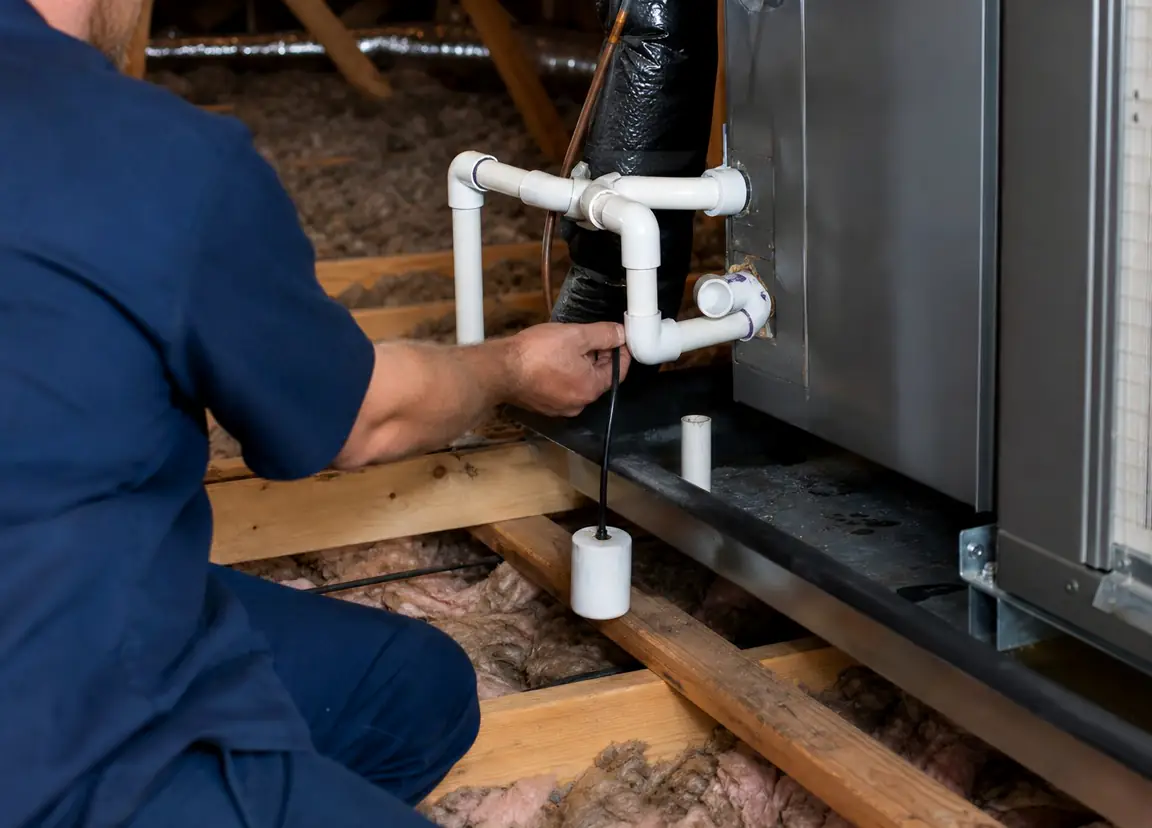
A clogged condensate drain line may show up as water around the indoor air handler, a damp ceiling below an attic unit, or an AC that stops cooling without warning. Many systems have a float switch that shuts cooling off when water rises in the drain pan, helping limit an overflow.
Look for water near the unit and check whether the thermostat still calls for cooling. Do not assume the AC has failed: a float switch can stop operation because the drain is backed up. For details on that shutoff, read what an AC float switch does.
A rusty, cracked, or overflowing pan points to a separate concern as well as a possible drain problem. See AC drain pan signs and replacement considerations if you notice corrosion or standing water.
Why Dallas AC drain lines can back up during long cooling runs
An air conditioner removes moisture from indoor air as it cools, and that water normally leaves through the condensate drain. Sludge, algae-like buildup, dust, or debris can obstruct the line; when water cannot drain, it may collect in the pan or activate the float switch.
The National Weather Service’s 1991–2020 normal July high at DFW Airport is about 96°F. Long AC cycles from June into September can mean more condensate moving through the drain, so a small obstruction may become noticeable when cooling demand is high. See the National Weather Service Dallas-Fort Worth climate normals.
Water that keeps returning after it is wiped up, repeated AC shutdowns, or a drain pan that fills again are reasons to stop running the system and arrange service. Continued operation with water backing up can lead to an overflow and damage nearby ceilings, flooring, or equipment.
Which AC drain-line signs call for action
Use these clues to decide whether to monitor a minor symptom or shut the system off and get help. Water near electrical parts or an active ceiling leak calls for prompt attention.
- Water beside the indoor unit — Turn the AC off if water is actively leaking, then keep people and stored items away from the wet area. Note whether the water is coming from the drain pan, drain connection, or another visible spot without opening the equipment.
- Cooling stops and the thermostat still calls for it — A float switch may have interrupted operation because water rose in the pan. Do not bypass the switch; it is there to respond to water buildup.
- Musty odor or repeated dampness — A drain that holds water can leave the pan or nearby surfaces damp. Note when the odor occurs and whether it returns after the system runs.
- Water stain below an attic air handler — A ceiling stain can mean water has escaped the pan or drain path. Stop cooling and arrange an HVAC inspection rather than waiting for the stain to spread.
Need help now? (469) 369-0748
Safe checks to make before calling about a clogged AC drain line
These checks help you describe the problem without taking apart the air handler or forcing a clog deeper into the line. Stop at any step that requires reaching into equipment or working near wiring.
- Turn the thermostat to off — If water is leaking or the system has shut itself down, set cooling to off. Check that the indoor unit stops running; do not keep restarting it to test whether the leak returns.
- Look for water with a flashlight — Check the floor and the area around the air handler, then look for a ceiling stain below an attic unit. Note where the water appears, but do not remove equipment panels.
- Inspect only the visible drain pan — If the pan is easily visible without opening the unit, look for standing water, rust, or a crack. Do not reach into the pan or touch nearby electrical connections.
- Check the thermostat display — Write down any message or setting you see and whether the thermostat is calling for cooling. This helps distinguish a float-switch interruption from a thermostat setting change.
- Look at the visible drain outlet — If you can see the outdoor end of the condensate line safely from the ground, note whether water is coming out while the AC is running. Do not insert wire, tools, or chemicals into the opening.
- Take a photo and note when it started — Use your phone to photograph the water or stain and record whether it began during a long cooling cycle. Check whether the same area becomes wet again after you wipe it.
- Leave the AC off if water or shutdown returns — A recurring leak or float-switch shutdown means the drain path needs attention, not repeated restarts. Keep the system off and contact an HVAC professional to inspect the line and switch.
When to monitor, shut off, or book AC drain-line service
A one-time small damp spot with no continuing leak is different from a pan that keeps filling or an AC that repeatedly shuts down. Use the pattern and amount of water to choose the next step.
Monitor a minor, resolved damp spot
If the area is dry, the AC runs normally, and water does not return, keep an eye on the same spot during the next cooling cycle. A repeat leak or shutdown changes the decision: turn the system off and arrange service.
Call an HVAC technician for recurring backup
Repeated water, a float-switch trip, or a blocked line that you cannot safely access calls for professional diagnosis. Our condensate drain line and float switch service starts at $69.
Ask for an inspection when the cause is unclear
A leak can come from a clogged drain, damaged pan, or another part of the system, so guessing at a replacement can miss the real issue. We provide a $29 inspection for any heating or cooling problem.
When an AC drain line needs repair instead of simple clearing
A drain line that is intact but obstructed may need clearing; a cracked, disconnected, or badly damaged section may need repair or replacement. A float switch that keeps shutting the AC off also needs attention, but bypassing it only removes the warning while water may still be rising.
Ask the technician to identify whether the issue is a blockage, a damaged drain line, a pan problem, or a switch response before deciding on replacement. The correct fix depends on which part has failed and where it is accessible. For broader Dallas-area HVAC service, our business serves Dallas and towns within 40 miles.
Need help now? (469) 369-0748
How to reduce the chance of another condensate drain backup
During routine AC maintenance, have the condensate drain checked along with the rest of the cooling system. ENERGY STAR includes checking the condensate drain in its heating and cooling maintenance guidance; see its maintenance checklist.
Keep the area around the indoor unit visible so you can spot dampness early, and pay attention to recurring shutdowns instead of repeatedly resetting the system. Michael Anderson, the owner, has 28 years of heating and air conditioning experience.
Frequently asked questions
Why does my AC shut off when the drain line is clogged?
Water can back up into the drain pan, where a float switch may stop the AC to limit overflow. Do not bypass the switch; turn cooling off if you see water and have the drain and switch checked.
Can a clogged AC drain line cause water damage?
Yes. Water that escapes a pan or backs up at the indoor unit can wet nearby ceilings, floors, or equipment. Turn the AC off when you see an active leak and address the source rather than only wiping up the water.
What affects AC line replacement cost?
An AC line replacement cost depends on whether you mean the condensate drain line or another AC line, and on the damaged part and access. Condensate drain line and float switch service starts at $69; that starting price is not a quoted replacement price.
What affects AC line repair cost?
AC line repair cost depends on the part causing the problem: a blockage, damaged drain line, pan issue, or float-switch response can require different work. We offer a $29 inspection for any heating or cooling problem to identify what is causing the symptom.
Get the drain problem checked
Call (469) 369-0748 to arrange service for a clogged AC drain line or repeated water near your indoor unit.