
Mold in Your AC Unit: Signs and Cleaning
Mold in your AC unit can show as visible growth on accessible parts, a musty odor when cooling starts, or dampness near indoor equipment; turn the system off if you see growth. Call (469) 369-0748 for an inspection; we serve Dallas and nearby towns.
Need help now? (469) 369-0748
Signs of Mold in an AC Unit You Can Check Safely
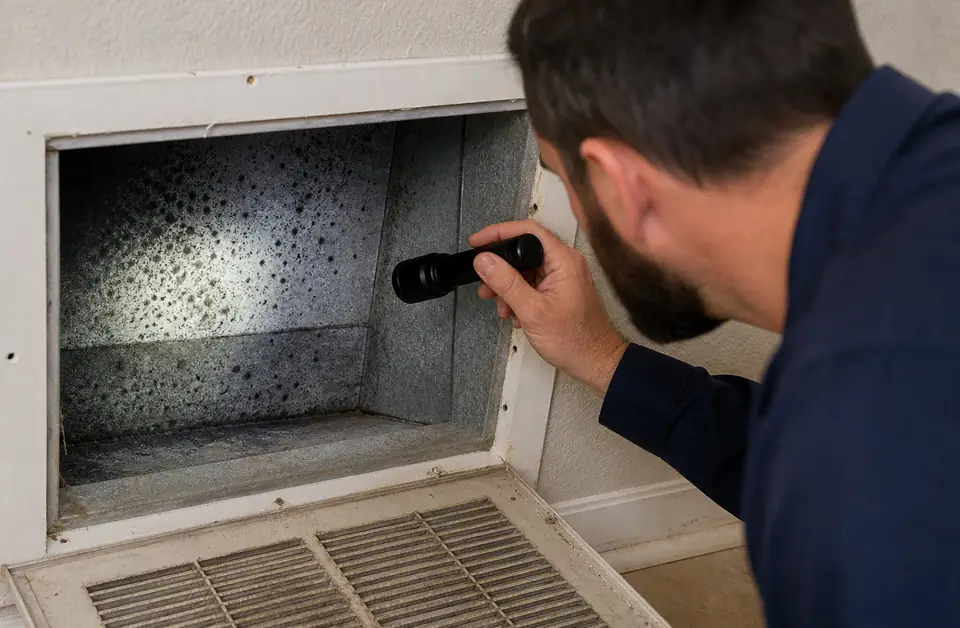
A dark patch is not enough to identify mold with certainty: dirt, dust and other residue can look similar. Look for a combination of visible growth, recurring moisture and an odor that returns when the system runs. The EPA says duct cleaning makes sense when there is visible mold inside hard ducts or other parts of the system.
- Visible spots near an accessible vent — Look for irregular dark or light patches on the vent surface or immediately inside the opening. Do not reach into the duct or scrape the material; a close photo can help show where you noticed it.
- Musty odor that comes back with cooling — Notice whether the smell starts when the AC runs and fades after it stops. Odor alone does not prove mold, so note when it happens and where it is strongest.
- Moisture around indoor equipment — Check the floor and nearby surfaces for fresh dampness or water marks without opening the equipment cabinet. Recurring moisture matters because mold growth needs a source of dampness.
- Dust or debris released at a register — Observe whether visible particles come out when air starts flowing. The EPA lists excessive dust and debris released from registers as another situation where duct cleaning may make sense.
What to Do First When You Suspect Mold in Your AC
Avoid running the system through the house when you see suspected growth inside HVAC equipment. The EPA advises against operating a system that may be spreading mold, and says the moisture source needs attention as part of cleanup.
- Turn cooling off at the thermostat — Set the system to off rather than switching it on and off repeatedly. Check that the indoor fan also stops, so it is not continuing to move air through the suspected area.
- Keep clear of the suspected material — Do not brush, scrape or vacuum visible growth in a vent or equipment opening. Disturbing it can send dust and particles into the room.
- Record where and when you notice it — Use a phone camera to photograph visible material without touching it. Note whether the smell or dampness appears only during cooling or remains when the system is off.
- Check the filter without opening equipment — If the filter slides out through an accessible slot, inspect it for heavy dust or dampness and note its size and condition. Do not remove cabinet panels or reach toward wiring, coils or a blower.
- Look for an obvious water source — From a safe distance, check for a fresh puddle, a wet ceiling below equipment, or water staining near the unit. Do not open the drain pan or try to access internal parts.
- Avoid spraying cleaners into the system — Do not put bleach, fragrance, disinfectant or household cleaner into a vent or AC cabinet. Spraying may spread liquid to parts that are not meant to be wet and will not address the cause of recurring moisture.
- Arrange an HVAC inspection — Call when you see growth inside the system, find recurring moisture, or notice a musty odor that returns with operation. We inspect the heating or cooling problem for $29; keep the system off if you suspect air is passing through visible growth.
How Mold in an AC Unit Differs From Dust in the Vents
Dust often appears as loose, dry particles, while suspected mold may look like patches attached to a surface. But appearance alone cannot confirm what a spot is. Compare what you can observe, then leave any material inside the duct or equipment undisturbed.
Loose dust
Dry, powdery material that wipes from an exposed surface may be household dust, but avoid wiping suspected growth to test it. For a closer comparison of signs, see mold vs. dust in air vents.
Possible mold growth
Patches attached to an interior surface, especially alongside recurring dampness, call for an HVAC inspection rather than DIY scraping. The EPA identifies visible mold inside hard ducts or other system parts as a reason duct cleaning may be appropriate.
Musty odor without visible spots
A smell can point to a moisture or cleanliness issue, but it cannot tell you where the source is. Read more about why your AC smells musty and note whether the odor starts with the system.
Need help now? (469) 369-0748
Why an AC Moisture Source Must Be Addressed Before Cleaning
Cleaning visible residue without correcting the damp condition can leave the same problem in place. The EPA’s Mold Cleanup in Your Home guidance says to fix the moisture source first and warns against running an HVAC system when mold may be in it.
Air conditioning removes moisture from indoor air as it cools, and water needs a clear path away from the indoor equipment. A recurring wet area near the unit, fresh water marks, or dampness that returns after cleanup gives an HVAC technician useful information about where to investigate. Do not open the unit or try to clear internal components yourself.
Share what you observed, when it began, whether the AC was running, and whether water appeared more than once. Those details help distinguish a one-time spill from a condition that needs attention before the system operates again.
When AC Mold Cleaning, Coil Cleaning or Duct Cleaning Fits
The right cleaning depends on where the suspected growth or residue is found. A spot at a register does not by itself show whether the source is in the duct, coil area or another part of the system, so the inspection should identify the affected location before cleaning begins.
HVAC mold cleaning
This fits a concern about mold-like material in ducts or coils that needs an HVAC inspection. Our HVAC mold cleaning service addresses cleaning in ducts and coils; it is not a substitute for correcting the moisture source.
Duct cleaning
This may fit when visible growth is found inside hard ducts, or when insects, rodents, or excessive dust and debris coming from registers are present. The EPA’s duct-cleaning guidance explains these situations and notes that duct cleaning has not been shown to prevent health problems.
Coil or equipment inspection
This is the better next step when the suspected material appears near indoor equipment or a musty odor returns with cooling but the ducts have not been identified as the source. The technician can inspect the relevant area before deciding whether cleaning is needed.
What a Proper AC Mold Cleaning Should Check
A useful cleaning visit should identify the affected parts instead of treating every dark mark as mold or cleaning every duct by default. Ask what area was inspected, what was found and whether moisture still needs correction.
- The reported location — Point out the vent, indoor unit area or room where you saw spots, smelled an odor or found dampness. A focused inspection starts with the evidence you observed.
- The affected surface or component — Confirm whether the concern is in a duct, coil area or another accessible part of the system. That distinction helps match the cleaning to the location instead of assuming a whole-duct problem.
- The moisture condition — Ask whether the inspection found water or another condition that could keep the area damp. Cleaning alone will not resolve a continuing moisture source.
- The condition after cleaning — Check that the reported area has been addressed and ask what remains to be corrected before operating the system. If a musty smell or dampness returns, report when it happens rather than repeatedly spraying or wiping the area.
Need help now? (469) 369-0748
How to Reduce the Chance of AC Mold Returning
The most useful follow-up is to keep moisture from collecting again. Have any continuing water issue checked, and replace a dirty or damp filter with the correct size for your system. The U.S. Department of Energy says cleaning or replacing a dirty filter can reduce an air conditioner’s energy use by 5 to 15 percent; that figure concerns energy use, not mold prevention.
Watch the same places that first showed trouble: the indoor unit area, nearby surfaces and the vent where you noticed an odor or visible material. If water or spots return, stop relying on surface cleaning and have the HVAC system checked again. Persistent mustiness without visible growth also deserves attention because odor alone does not identify the source.
For Dallas and nearby towns, we go to the customer for HVAC service. Call if the suspected material is inside the system, if moisture keeps returning, or if you are unsure whether the affected area is a duct or an AC component.
Frequently asked questions
Can I run my AC if I see mold inside the unit?
Turn the system off if you see suspected growth inside the equipment or duct, and avoid running air through that area. The EPA advises not operating an HVAC system when mold may be in it; arrange an inspection to identify the affected part.
Does a musty smell from my AC always mean mold?
No. A musty smell can signal a moisture or cleanliness issue, but odor alone does not confirm mold or show where the source is. Note when the smell starts and whether you see dampness or visible material.
Can I clean suspected mold from an AC vent myself?
Do not scrape or spray material inside a vent or equipment opening, because disturbing it can spread particles and household cleaners do not identify the moisture source. Keep the system off if growth appears to be inside it and arrange an HVAC inspection.
Should every AC mold concern lead to duct cleaning?
No. Cleaning should match the affected location: visible growth inside hard ducts may call for duct cleaning, while a concern near indoor equipment needs inspection of that area. The EPA also identifies insect or rodent infestation and excessive dust or debris from registers as situations where duct cleaning may make sense.
Suspect Mold in Your AC?
Call (469) 369-0748 to arrange a $29 inspection for a heating or cooling problem.