
Why Your AC Smells Musty
A musty AC smell usually points to moisture or buildup around the filter, drain pan, evaporator coil, or ducts. Call us to inspect it, and switch the system off if you see visible mold in or near the HVAC system.
Need help now? (469) 369-0748
Why Your AC Smells Musty After It Starts
An AC that smells musty often has moisture or organic buildup around a component where air moves. Common places to consider are a dirty or damp filter, a wet drain pan, the evaporator coil area, or ductwork. The smell alone does not tell you which one is responsible, so note where and when you notice it before choosing a fix.
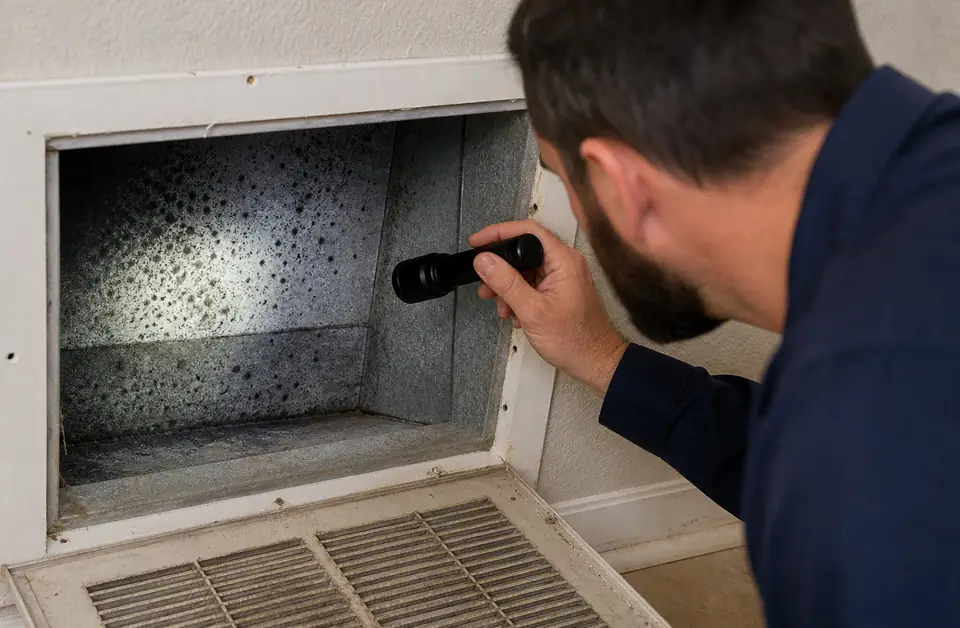
A brief odor at startup can come from a dirty filter or dust near a vent, while a persistent odor throughout the home deserves a closer look at the system and ducts. Notice whether the smell comes from one register or several, whether it starts as soon as the blower runs, and whether it remains after the system shuts off. For a visual guide to warning signs, see mold in your AC unit: signs and cleaning.
Signs That Point to the Filter, Drain, Coil, or Ducts
Use the smell’s location and timing to narrow down what to inspect. These clues are not a diagnosis, but they help you describe the problem accurately.
- Odor mainly at one register — Look at the grille and the nearby wall for visible dust or dampness. One affected vent can point to a local vent or duct issue rather than an odor distributed across the whole system.
- Odor from several supply vents — A smell that travels to multiple rooms may come from a shared part of the air system. Check the filter and note whether the odor appears whenever the system runs.
- Damp or visibly dirty filter — A filter that is wet, clogged, or coated with debris needs attention. Check its size and replacement instructions before changing it, and do not put a damp filter back in.
- Visible growth or water near the equipment — Do not brush, spray, or vacuum visible growth inside the HVAC system. Turn the system off and arrange an inspection; moisture around the equipment also needs its source identified.
Which Musty-Smell Fix Fits What You See
A filter change, a drain-related repair, and cleaning ducts or coils address different conditions. Match the next step to the evidence instead of treating every musty odor as a duct-cleaning problem.
Replace the filter when it is dirty or damp
Use the filter size and type specified for your system. A new filter may address a filter-related odor, but it will not fix standing water or visible growth elsewhere.
Investigate moisture when water is present
A wet area near the indoor unit or drain pan calls for finding the source of the moisture. Cleaning surfaces without correcting the water source can leave the same conditions in place.
Consider HVAC mold cleaning for visible growth in ducts or coils
Our HVAC mold cleaning is for ducts and coils. The HVAC mold cleaning service is the relevant service when inspection shows that this type of cleaning fits the problem.
Compare mold with dust before deciding on duct cleaning
Ordinary dust and visible growth are not the same sign, and a smell by itself does not prove mold is in the ducts. Use this guide to tell mold from dust in air vents before choosing a cleaning.
Need help now? (469) 369-0748
Safe Checks to Make Before an HVAC Visit
Keep your checks to accessible parts and observations. Do not open equipment panels, touch wiring, or try to remove growth from inside the system.
- Turn the system off if you see visible mold — Use the thermostat to switch the HVAC system off when you see visible growth in or near the equipment. The EPA advises not to run a system when mold is present in it; check that the blower stops.
- Note when the odor begins — Record whether it starts at startup, continues through the cooling cycle, or remains after the system stops. This timing helps distinguish a brief odor from one that returns throughout operation.
- Check the thermostat setting — Confirm the system is set to the mode you expect, such as cooling, and note whether the fan is set to run continuously. Do not use the fan to circulate air if you have found visible mold in the HVAC system.
- Inspect the filter without reaching into the unit — Remove only the filter you can access as intended, then check for dampness, heavy debris, or a wrong fit. Follow the filter label or system instructions when replacing it, and verify the new filter sits in the correct direction.
- Look at the registers and return grille — Use a flashlight to check visible grille surfaces for dust, moisture, or growth. Note whether one vent or multiple vents show the same condition; do not push tools into the duct.
- Look for water around the equipment — From outside the cabinet, check the floor and accessible area around the indoor unit for water or dampness. Do not remove access panels or reach toward the drain pan, wires, or moving parts.
- Write down what changed — Note recent filter changes, a smell that began after a long period of use, and any water or visible growth you found. Keep the system off if visible mold is present, and share those observations when arranging an inspection.
Why a Musty AC Odor Can Return After Cleaning
Cleaning a surface without correcting the moisture source can allow damp conditions to continue. The EPA’s mold cleanup guidance emphasizes fixing the moisture problem, and its advice for mold in HVAC systems is not to run the system through the home. That is why a recurring odor or visible growth calls for inspection rather than repeated spraying or fragrance products.
A filter change can help when the filter itself is the source, but it cannot clear a drain problem or clean contamination inside a coil or duct. Avoid pouring cleaners into the equipment or using bleach sprays around it; liquids and chemicals can reach parts you cannot see or safely inspect. Record what you tried so the technician can tell whether the smell changed.
When a Musty AC Smell Means Stop Running the System
Switch the system off if you see visible mold inside the HVAC system, or if water is collecting around equipment and the odor continues. The EPA says mold in an HVAC system should not be run through the home. Arrange an HVAC inspection instead of trying to clean internal components yourself.
If you do not see visible growth or water, but the odor keeps returning, note the affected rooms and how long the smell lasts, then have the system checked. For a separate issue where the odor seems concentrated at vents, compare what you see with the signs in mold versus dust in air vents. That distinction can help clarify whether duct cleaning is worth considering.
Need help now? (469) 369-0748
When HVAC Mold Cleaning or Duct Cleaning Makes Sense
The EPA says duct cleaning makes sense when there is visible mold growth inside hard-surface ducts or other parts of the heating and cooling system, an insect or rodent infestation, or excessive dust and debris coming from registers. A musty smell alone does not establish that duct cleaning is needed, so look for those conditions and have the source checked.
The EPA also states that duct cleaning has not been shown to prevent health problems. Cleaning should address a specific condition found in the system, not serve as a promise about health or as a substitute for fixing moisture. When visible growth is in ducts or coils, ask about HVAC mold cleaning and keep the system off until it has been inspected.
What Dallas’s Long Cooling Season Means for a Musty AC
Dallas-Fort Worth AC systems run through a long, hot summer. The National Weather Service Fort Worth reports a normal July high of about 96°F at DFW Airport, and cooling cycles commonly extend from June into September. That long operating season makes it useful to notice whether the smell appears during every cycle or only after the system has been off.
A recurring odor during heavy cooling use is not a reason to assume the ducts need cleaning; it is a reason to check the filter, look for accessible signs of moisture, and arrange an inspection if the odor persists. A technician can assess the heating or cooling problem at your home, and Dallas 24 Hour HVAC serves Dallas and towns within 40 miles.
What to Tell a Dallas HVAC Technician About the Smell
Describe the odor as specifically as you can: when it starts, which rooms are affected, whether it fades, and whether you found a wet filter, water, or visible growth. Tell the technician whether you changed the filter or turned the system off. These details direct attention toward the conditions you observed instead of relying on the smell alone.
A $29 inspection applies to any heating or cooling problem. Call Dallas 24 Hour HVAC at (469) 369-0748 to arrange an inspection, or use our contact page.
Frequently asked questions
Should I run my Dallas AC if I see mold inside the system?
No. Turn the system off and arrange an HVAC inspection; the EPA advises not to run an HVAC system when mold is present in it. Do not try to clean internal components yourself.
Does Dallas summer heat explain why my AC smells musty?
Dallas-Fort Worth has long, hot summers, and the National Weather Service reports a normal July high of about 96°F at DFW Airport. That explains why systems run heavily in summer, but the odor still needs to be traced to a filter, moisture, coil area, or duct condition.
Does a musty smell mean my Dallas home needs duct cleaning?
Not by itself. The EPA identifies visible mold inside hard ducts or other system parts, insect or rodent infestation, and excessive dust or debris coming from registers as reasons duct cleaning may make sense.
What should I tell an HVAC technician about a musty smell in Dallas?
Note when the smell starts, which rooms or vents are affected, and whether you saw water, a damp filter, or visible growth. Share any steps you took and keep the system off if you found visible mold inside it.
Get the Musty Smell Checked
Call Dallas 24 Hour HVAC at (469) 369-0748 to arrange an inspection for your heating or cooling problem.