
Mold vs Dust in Air Vents: How To Tell
You can’t reliably identify mold by color alone: dust usually sits as loose, dry particles, while suspected mold may appear attached to a surface. Call an HVAC professional if you see possible growth inside a duct or HVAC component.
Need help now? (469) 369-0748
Mold vs Dust in Air Vents: What the Difference Looks Like
Dust tends to look like loose gray or brown particles that collect on the vent grille and nearby surfaces. It may come back after cleaning because household dust can come from fabric fibers, tracked-in soil, paper, and other everyday sources. A dusty grille by itself does not prove that the ductwork is dirty or moldy.
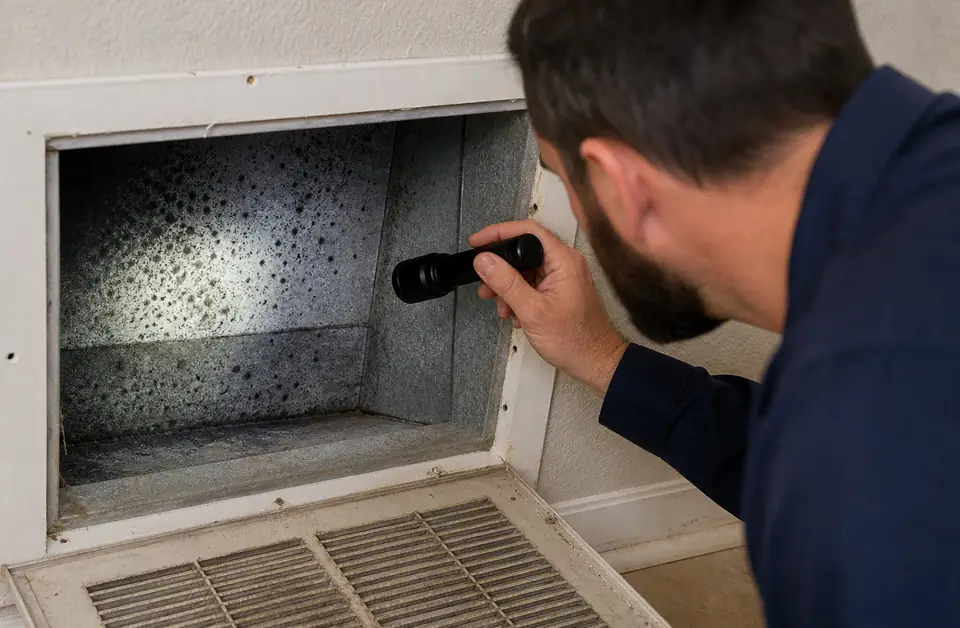
Suspected mold may look like spots, smears, or a film that stays attached to a surface rather than brushing away like loose debris. But color and appearance cannot confirm what a substance is. Do not scrape or disturb a patch inside a duct to identify it.
Look at where the material appears, whether it wipes away easily from the outside of a grille, and whether there is a moisture problem nearby. A musty odor can be another clue, but smell alone does not identify mold; see why your AC smells musty for more on that separate sign.
Signs Around Your Vents That Point to Dust or a Moisture Problem
Check the pattern, not just the color. A few observations can help you decide whether routine dust control is enough or an HVAC inspection is the safer next step.
- Loose debris on the grille — Dry particles sitting on the outer grille often indicate surface dust. Wipe only the accessible grille and watch whether debris gathers again quickly or appears to blow from the register.
- Spots that stay attached — Marks that remain on a surface or appear to spread may be suspected growth, but visual inspection cannot establish that they are mold. Avoid touching or brushing material inside the duct.
- Water or persistent dampness — Moisture near a vent, air handler, or ceiling can point to a leak or condensation problem that needs attention before cleaning. Note where it appears and whether it returns.
- Dust coming from multiple registers — If registers release excessive dust or debris, the EPA lists that as a situation in which duct cleaning may make sense. A dirty filter or gaps in the duct system can also contribute, so inspect the filter and ask an HVAC professional to check the system.
Which Air-Vent Problem Calls for Cleaning or an HVAC Inspection?
Choose the next step based on what you can see and where it is. Dust on an accessible surface calls for a different response than suspected growth inside the HVAC system.
Loose dust on the vent face
Wipe the accessible grille with a dry or slightly damp cloth and check the HVAC filter. If the material comes off easily and there is no moisture or attached growth, keep monitoring the surface rather than assuming the ducts need cleaning.
Suspected growth inside a duct or HVAC component
Do not brush, vacuum, or spray it yourself. Turn off the HVAC system and arrange an inspection, especially if there is moisture or the material is in a part of the system that is hard to reach.
Recurring dust without visible growth
Check whether the filter fits snugly and is due for replacement, then note which rooms and registers are affected. An HVAC professional can assess whether the issue involves the filter, duct condition, or another part of the system.
Need help now? (469) 369-0748
How to Check an Air Vent Without Spreading Debris
Use these steps to document what you see without opening ductwork or disturbing suspected growth. Stop if you find attached material inside the system or an active moisture problem.
- Turn the thermostat off — Set the HVAC system to off before looking closely at the register. Check that the fan is no longer blowing so loose debris is not being moved while you inspect.
- Look at the outside of the grille — Use a flashlight to view the vent face and its edges without reaching into the duct. Note whether the material is loose on the surface or appears attached farther inside.
- Take a photo — Use your phone camera to record the location and appearance before cleaning or touching anything. Check that the image shows the vent and the surrounding area, which can help an HVAC professional understand where you found it.
- Check for moisture nearby — Look for water stains, damp surfaces, or visible dripping around the vent and accessible HVAC equipment. If you find moisture, record where it is rather than wiping away evidence of an active leak.
- Inspect the air filter — With the system off, check whether the filter is dirty, damaged, or sitting crooked in its slot. Confirm that it fits the opening without obvious gaps; replace it according to the filter maker’s directions if it is due.
- Clean only accessible loose dust — If the grille has ordinary loose dust and no suspected attached growth, wipe the accessible surface with a cloth. Check whether the material lifts easily; stop if it smears, stays attached, or is inside the duct.
- Decide whether to run the system — If you see suspected mold inside the HVAC system, do not run the system while waiting for an inspection. The EPA advises not to operate an HVAC system if you know or suspect it is contaminated with mold.
- Share the details with an HVAC professional — Provide the photo, the location, whether you found moisture, and whether the material was loose or attached. Check after the inspection that the source of moisture has been identified before cleaning is treated as the complete fix.
Why Moisture Has to Be Addressed Before Air-Vent Mold Cleaning
Cleaning visible material without dealing with moisture can leave the condition that allowed it to appear. Check for a source such as a leak or ongoing condensation and have the cause addressed before the affected HVAC area is cleaned.
The EPA’s Mold Cleanup in Your Home guidance says to fix the water problem first and advises against running an HVAC system when mold may be in it. If you find possible growth inside a duct, coil, or other HVAC part, stop using the system and request an inspection rather than attempting to clean inside it.
The EPA says duct cleaning may make sense when there is visible mold growth inside hard ducts or other parts of the system, an insect or rodent infestation, or excessive dust and debris coming from registers. It also notes that duct cleaning has not been shown to prevent health problems. Read the EPA’s duct-cleaning guidance to see how it frames those situations.
What to Do About Suspected Mold Inside Your HVAC System
When suspected growth is inside a duct or HVAC component, keep the system off and call an HVAC professional to inspect the affected area. Share what you observed and whether you found dampness, staining, or a recurring musty odor; those details help direct the inspection.
Our HVAC mold cleaning service covers mold cleaning in ducts and coils, with service starting from $89. Cleaning is not a substitute for correcting a moisture source, so have that issue addressed as part of the next step.
If the evidence is only loose dust on a grille, start with the accessible surface and the air filter rather than assuming mold is present. For a broader system concern, contact us to arrange a $29 inspection for a heating or cooling problem.
Need help now? (469) 369-0748
What an Air Filter or Purifier Can—and Cannot—Tell You
A filter that is visibly loaded with dust is a reason to check whether it is due for replacement and whether it fits the filter slot correctly. The U.S. Department of Energy says replacing or cleaning a dirty filter can lower an air conditioner’s energy use by 5 to 15 percent; that does not identify material inside a duct as mold.
A portable air purifier may capture some airborne particles, depending on its filter and how it is used, but it does not remove material attached inside ductwork or fix a moisture source. If you are asking whether air purifiers help with dust, treat one as a separate room-level measure—not a substitute for checking the HVAC system when you see suspected growth.
Frequently asked questions
What causes dust around an air vent?
Household dust can come from fabric fibers, soil tracked indoors, paper, and other everyday sources, then collect on a vent grille. A dirty or poorly seated filter can also allow particles to bypass it, so check the filter and note whether dust is coming from one register or several.
How do I get rid of mold in air vents?
Do not brush, vacuum, or spray suspected growth inside a duct or HVAC component. Turn off the system, address any moisture source, and have an HVAC professional inspect the affected area before cleaning.
Can I keep the HVAC running if I see suspected mold inside it?
No—turn the system off while you arrange an inspection if you see suspected mold inside the HVAC system. The EPA advises against operating a system that is known or suspected to be contaminated with mold.
Can an air purifier remove dust from my ducts?
A portable purifier can capture some airborne particles in the room, depending on its filter, but it does not clean inside ducts. If dust is coming from registers or you see attached material, have the HVAC system checked rather than relying on a purifier.
Suspect Mold Inside Your HVAC System?
Keep the system off and contact us to arrange an inspection and discuss HVAC mold cleaning for ducts and coils.