
Ductwork Replacement Cost
Ductwork replacement cost has no listed starting price; the $29 inspection applies to any heating or cooling problem. Call (469) 369-0748 to arrange an inspection for your ducts.
Our Starting Prices in Dallas
| Service | Price |
|---|---|
| Air Duct Cleaning | from $85 per HVAC unit |
| Dryer Vent Cleaning | from $65 |
| AC Repair | $29 inspection |
| Blower Cleaning | from $69 |
| Evaporator Coil Cleaning | from $139 |
| HVAC Mold Cleaning | from $89 |
| Duct Sanitizing | from $65 |
| Blown-In Insulation | from $0.89 per square foot |
| AC Capacitor Replacement | from $125 |
| Refrigerant Recharge | from $59 per pound |
| Condensate Drain Line and Float Switch | from $69 |
| Emergency AC Repair | $29 inspection |
| Furnace Repair | $29 inspection |
| Heat Pump Service | $29 inspection |
| HVAC Tune-Up | from $45 |
Need help now? (469) 369-0748
Ductwork Replacement Cost Starts With Identifying the Problem
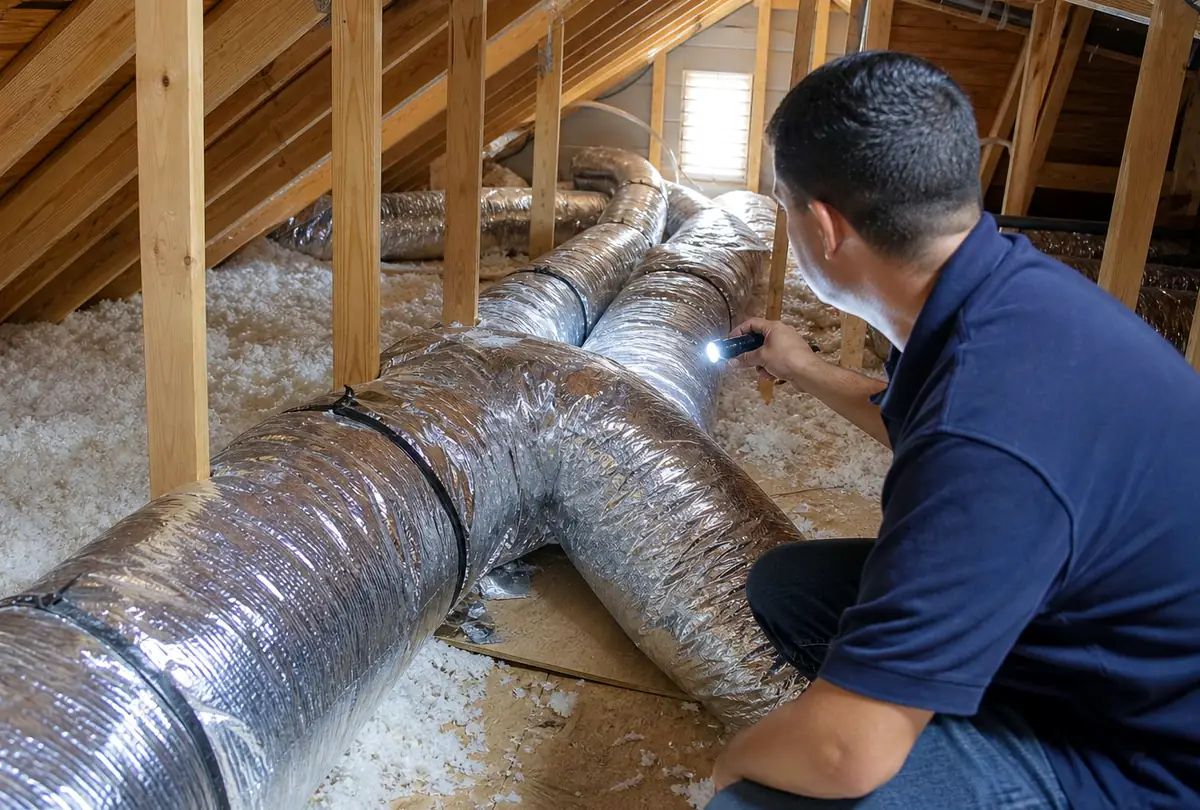
The right cost comparison begins by determining whether ducts are damaged, disconnected, poorly sealed, or simply dirty. Replacement addresses duct sections that can no longer reliably carry air; cleaning removes dust and debris, while sealing addresses leaks at joints.
Our listed inspection for a heating or cooling problem is $29. There is no listed starting price for Air Duct Replacement, so an inspection helps establish what work the duct system actually needs before you compare replacement with a smaller repair.
ENERGY STAR says leaky ducts can reduce heating and cooling efficiency by up to 20 percent. Its duct-sealing guidance recommends mastic or metal foil tape for joints and insulation of R-6 or higher for attic ducts.
Signs Dallas Ducts May Need More Than a Cleaning
Look for clues that point to a physical duct problem, not just accumulated dust. Note where the symptom occurs and whether it changes when the system runs.
- Visible tears or crushed sections — A torn, collapsed, or badly deformed duct can restrict or lose airflow. Keep your check to ductwork you can see safely; do not climb into an attic or open equipment panels.
- A disconnected joint — A loose connection can send conditioned air into an attic, crawl space, or wall cavity instead of the room. Record the location and leave the reconnection or sealing work to an HVAC technician.
- One room stays uncomfortable — A single room with weak airflow can point to a local restriction, leak, or duct layout issue. Compare it with nearby rooms and note whether the problem happens during both heating and cooling.
- Dust or debris blows from registers — Excessive dust or debris coming from registers can justify closer inspection, but dust alone does not prove ducts need replacement. The EPA says cleaning may make sense in specific situations, including excessive debris released from registers.
Choose Duct Repair, Cleaning, or Replacement for the Actual Defect
These options address different problems. A technician should identify the defect before you decide that replacing every duct is necessary.
Repair or seal
This fits a limited leak or loose connection when the surrounding duct is still intact. Ask the technician to identify the damaged joint or section and check the repaired area for secure connections.
Clean
Cleaning fits ducts that are dirty but remain structurally sound. Air duct cleaning starts from $85 per HVAC unit; it does not repair tears, reconnect loose ducts, or replace deteriorated material.
Replace a section or system
Replacement fits ductwork with extensive damage, repeated failures, or sections that cannot be restored to a sound condition. Ask which sections need replacement and why, rather than assuming every duct must come out.
Need help now? (469) 369-0748
Check Visible Duct Clues Before Calling About Replacement
These owner-level checks help you describe the issue without disturbing ductwork. Stop at anything that requires attic access, removing a panel, or handling electrical parts.
- Note the room and symptom — Write down which rooms feel different and whether airflow is weak, noisy, or dusty. Check whether the same room has the issue during heating and cooling.
- Check the thermostat setting — Confirm the thermostat is set to the mode you intend to use and that the temperature setting is appropriate. Note whether the system starts and whether the airflow problem remains.
- Inspect the air filter — Look at the filter in its normal accessible location and replace it if it is dirty, following the filter size and instructions. Check whether airflow improves, but remember a filter cannot fix a torn or disconnected duct.
- Look at room registers — Make sure supply registers and return grilles are not blocked by furniture or closed covers. Check whether the room still has weak airflow with the openings clear.
- Observe only exposed ductwork — From a safe, accessible location, look for visible gaps, tears, crushed areas, or disconnected joints. Do not pull, cut, tape, or climb on ducts; note the exact location instead.
- Compare nearby rooms — Check whether rooms served by nearby registers have similar airflow. A problem limited to one area gives the technician a useful clue about which branch or connection to inspect.
- Record when the problem occurs — Note whether the symptom appears as soon as the system starts or develops during a longer cycle. This helps distinguish a persistent duct issue from a problem that changes with system operation.
- Stop if you see moisture or suspected mold — Do not run a system when you see suspected mold in the HVAC system; the EPA advises addressing the moisture source and not circulating air through a mold-contaminated system. Contact an HVAC technician to inspect the affected area.
Call an HVAC Technician for Hidden or Widespread Duct Damage
Call a professional when ducts are inside walls or ceilings, multiple rooms have poor airflow, you see disconnected or damaged sections, or the problem returns after an accessible filter or register check. Ducts can be difficult to inspect fully from living spaces, and opening or altering them can create new damage.
We travel to customers in Dallas and towns within 40 miles. For suspected duct damage, our air duct replacement service can assess whether a section needs replacement or a less extensive fix is appropriate.
Dallas Heat Makes Airflow Problems Harder to Ignore
The National Weather Service’s 1991–2020 normals put the typical July high at DFW Airport at about 96°F. During long cooling cycles from summer into early fall, a leak or restriction can affect comfort when the system is working hard; the DFW climate normals provide the source for that local figure.
That heat does not by itself mean ducts need replacement. Use the timing of the problem, visible damage, and room-by-room airflow to guide the inspection rather than replacing ductwork based only on the season.
Need help now? (469) 369-0748
Three Duct Problems and the Starting Prices That Apply
A replacement price is not listed, but these examples show which listed service starting prices relate to common duct concerns. Use our prices to review the services with published starting amounts.
- You see a tear or disconnected duct — The $29 inspection for a heating or cooling problem is the listed starting charge for checking the concern. The inspection can help identify whether the damaged duct calls for repair or replacement; it is not a stated replacement price.
- The ducts appear intact but release dust or debris — Air duct cleaning starts from $85 per HVAC unit. Cleaning is for dirt and debris, not for fixing a damaged or disconnected duct.
- Airflow is poor, but you cannot see the cause — The inspection charge is $29 for a heating or cooling problem. An inspection can help locate whether the issue points to ductwork or another part of the heating and cooling system.
Get the Duct System Checked Before Choosing Replacement
Before the visit, note the affected rooms, when airflow changes, and any damage you can see without entering an unsafe area. Those observations help focus the inspection on the relevant ducts and connections.
Call (469) 369-0748 to request an inspection, or contact us with the rooms and symptoms you have observed. We can assess the duct concern at your property and identify whether replacement, repair, or cleaning fits the condition.
Frequently asked questions
How can I tell whether a duct needs replacement instead of repair?
A localized loose joint or limited leak may be repairable if the surrounding duct is intact. Tears, crushed sections, repeated failures, or widespread deterioration call for an inspection to determine whether replacing one section or more is appropriate.
Can air duct cleaning fix a damaged duct?
No. Cleaning removes dirt and debris from ducts that are structurally sound; it does not reconnect a loose joint or repair a tear. The EPA says cleaning may make sense when there is visible mold inside hard ducts, an insect or rodent infestation, or excessive dust and debris coming from registers.
Does a hot Dallas summer mean I should replace my ducts?
No, summer heat alone does not show that ducts are damaged. Note which rooms have weak airflow and look for visible damage in accessible areas before arranging an inspection.
What should I do if the ducts are inside a wall or ceiling?
Do not cut into a wall or ceiling to inspect them. Note the affected rooms and symptoms, then contact an HVAC technician to inspect the system and identify the location and condition of the ductwork.
Get Your Ductwork Inspected
Call (469) 369-0748 to arrange an inspection and find out whether the ducts need repair, cleaning, or replacement.