
Is Air Duct Cleaning Worth It?
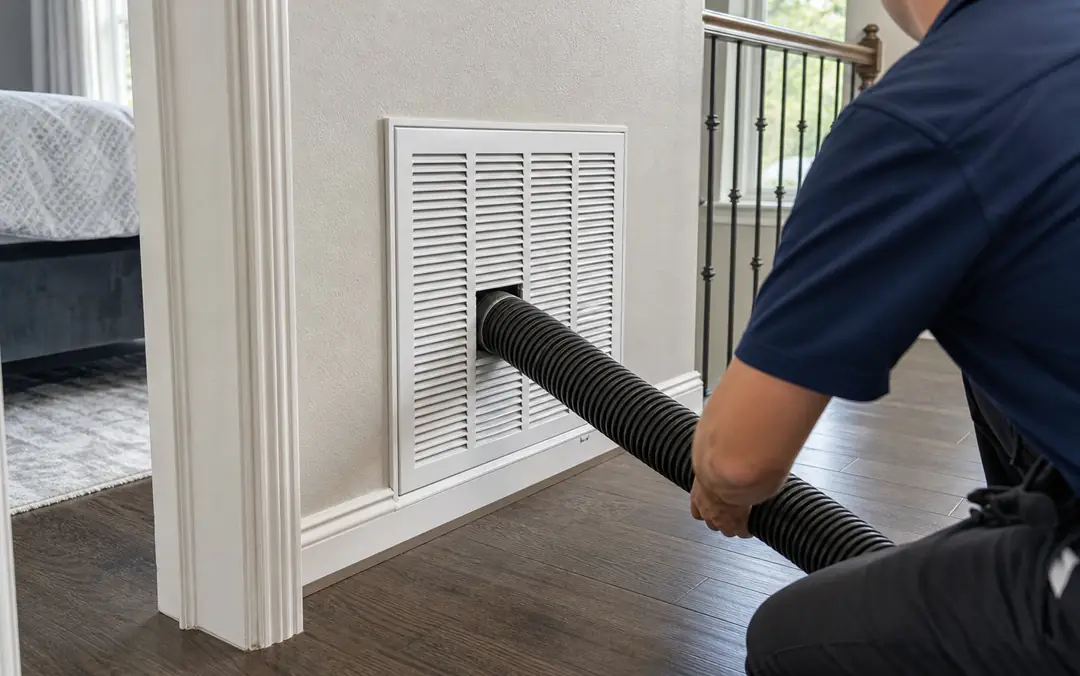
Air duct cleaning is worth it when you see mold inside hard ducts, find pests, or dust and debris blow from registers. Call us to arrange air duct cleaning service, starting at $85 per HVAC unit.
Need help now? (469) 369-0748
When Is Air Duct Cleaning Worth It?
Cleaning makes sense when there is a specific problem inside the duct system—not simply because a certain amount of time has passed. The EPA identifies visible mold inside hard-surface ducts or other parts of the heating and cooling system, insect or rodent infestation, and excessive dust or debris released from registers as reasons to consider duct cleaning.
The EPA also says duct cleaning has not been shown to prevent health problems. That matters when you are weighing a cleaning based only on a general promise of cleaner air: look for evidence in the system itself and ask what the service will clean. Its duct-cleaning guidance outlines the conditions that make cleaning worth considering.
- Visible mold inside hard ducts — A dark mark on a register is not proof of mold inside the ductwork. Check only what you can see without taking apart the system, and ask for the suspected growth to be inspected before agreeing to a full cleaning.
- Insects or rodents in the system — Look for visible evidence near registers or accessible duct openings. Cleaning may remove debris, but ask how the infestation source will be addressed so the same material does not return.
- Dust or debris blowing from registers — Notice whether particles come out when the system starts, rather than assuming ordinary dust on a register means the ducts need cleaning. Check several supply registers and note which ones show the same problem.
- No clear sign in the duct system — Start with the filter and visible registers instead of booking a duct cleaning automatically. If those checks do not reveal a duct problem, cleaning may not be the service that addresses your concern.
Which Fix Fits Your Dust or Airflow Problem?
Duct cleaning, filter replacement, and duct repair solve different problems. Matching the service to what you observe can keep you from paying to clean ducts when the real issue is elsewhere.
Filter replacement for a dirty filter
A clogged or visibly dirty filter is a reason to check the filter first and replace it according to its instructions. Cleaning the ducts does not substitute for routine filter changes.
Duct cleaning for debris or infestation inside
Choose this option when inspection shows a condition such as visible debris coming from registers or pests inside the system. Ask whether the proposed work covers the affected parts of the heating and cooling system, not just the register openings.
Duct repair for leaks or damaged sections
Cleaning removes buildup; it does not seal a gap, reconnect a loose section, or replace damaged ductwork. If you can see a disconnected or crushed duct, ask whether duct cleaning is actually needed or whether duct repair is the more direct fix.
What to Check Before Booking Air Duct Cleaning
Use these owner-level checks to describe the issue clearly. Do not remove duct sections or reach into equipment; record what is visible and leave system access to a technician.
- Note when the problem appears — Watch for dust or debris when the heating or cooling system starts. Write down whether it happens at one register or several, since that helps distinguish a local issue from a wider pattern.
- Look at the air filter — Turn the system off before removing the filter, then check it for a heavy layer of dust or damage. Note its size and condition, and reinstall it in the direction shown by the airflow arrow.
- Check visible register openings — Use a flashlight to look through the register without putting a tool or your hand into the duct. Take a photo of any visible debris or suspected growth so you can show exactly what raised the concern.
- Compare more than one room — Check a few supply registers and note whether the same material appears in multiple places. Dust limited to one register may call for a closer look at that opening rather than assuming every duct needs cleaning.
- Look for signs of pests — Note droppings, nesting material, or insects you can see near an opening; do not handle unknown material. Tell the technician which opening showed the evidence and whether you have seen it elsewhere.
- Treat suspected HVAC mold carefully — Do not run the system if you can see suspected mold inside HVAC equipment or ductwork, because airflow could move material through the home. The EPA’s mold cleanup guidance says to address the moisture source and not run a system when mold is in it.
- Ask what the cleaning includes — Before booking, ask which parts of the system the service will address and how the work will keep loosened debris from spreading into rooms. A clear scope lets you compare the proposed work with the evidence you found.
Need help now? (469) 369-0748
What Air Duct Cleaning Can—and Cannot—Fix
Duct cleaning is intended to remove debris from the duct system and relevant heating or cooling components. It will not fix a dirty filter, seal leaking duct joints, restore a damaged duct, or correct a mechanical problem in the AC or furnace. Those conditions need their own inspection and repair.
The EPA’s guidance describes cleaning the heating and cooling system rather than simply vacuuming the visible register. Ask what equipment and components are included, and what condition the technician found before and after the work. You can also read how often air ducts should be cleaned for guidance on why a calendar alone is not a good reason to book.
When to Schedule Cleaning and What It Costs
There is no single season that makes every home’s ducts due for cleaning. Schedule based on what you find: visible contamination, pests, or debris coming from registers are more useful signals than the month on the calendar. Spring and fall are common times for HVAC tune-ups, so you can note visible duct concerns during that seasonal check without assuming a cleaning is needed.
Our air duct cleaning starts at $85 per HVAC unit. The number of units and the scope of work affect the total, so ask for the price for your system before work begins; the separate guide to how much air duct cleaning costs covers pricing in more detail.
What to Do When the Ducts Still Look Dirty
If you can see debris, pests, or suspected mold, describe what you observed, identify the affected rooms, and share any photos. If the filter is dirty but you see no signs inside the ducts, replace the filter first and check whether the same issue continues.
When airflow is weak, the system is not heating or cooling properly, or the ducts appear damaged, cleaning alone may not resolve the problem. Call for HVAC service and have the cause checked before choosing duct cleaning.
Need help now? (469) 369-0748
Frequently asked questions
What is air duct and vent cleaning?
Air duct and vent cleaning removes dust and debris from parts of a home’s heating and cooling duct system. A proper scope should identify which system components are affected, rather than focusing only on the visible register covers.
What time of year is best for air duct cleaning?
There is no required season for duct cleaning; the condition of the ducts is the better guide. Spring and fall are common times for HVAC tune-ups, but schedule a cleaning when there is a specific sign such as pests or debris coming from registers.
Will my house be dusty after air duct cleaning?
The goal is to collect loosened debris rather than spread it through the rooms, but the result depends on how the work is set up and what is included. Ask how the technician will contain debris and check the affected areas after cleaning.
How do I know whether to clean my ducts or replace the air filter?
Replace a dirty filter according to its instructions, then watch whether dust or debris still comes from registers. Cleaning is more relevant when you find a separate sign inside the duct system, such as visible debris, pests, or suspected mold.
See Debris or Pests in Your Ducts?
Call Dallas 24 Hour HVAC to arrange air duct cleaning starting at $85 per HVAC unit.