
How Often Should Air Ducts Be Cleaned?
There is no set calendar interval: clean air ducts when you see visible mold inside hard ducts, signs of insects or rodents, or excessive dust and debris coming from registers. Call Dallas 24 Hour HVAC for an inspection to check whether duct cleaning fits the problem.
Need help now? (469) 369-0748
How Often Should Air Ducts Be Cleaned in a Dallas Home?
Air ducts do not need cleaning on a routine calendar just because a certain number of years has passed. The EPA recommends considering cleaning when you find visible mold inside hard ducts or other system parts, evidence of insects or rodents, or substantial dust and debris coming out of registers.
That guidance makes the condition of your system—not the age of the cleaning—the deciding factor. The EPA also says duct cleaning has not been shown to prevent health problems, so don’t treat it as a routine health measure. Read the EPA’s guidance on air duct cleaning before deciding.
Which Air Duct Signs Call for Cleaning?
Start with what you can see without taking the system apart. A dusty vent cover alone does not tell you what is inside the duct; check whether debris is repeatedly coming from the register after you clean the cover.
- Visible mold inside a hard duct — Look only at accessible areas through a register. Surface discoloration on a vent cover is not enough to confirm mold inside the duct; have a professional inspect what you cannot safely see.
- Evidence of insects or rodents — Droppings, nesting material, or insect activity near a register warrants a closer look. Cleaning should follow attention to the source of the infestation so debris does not simply return.
- Dust or debris coming from registers — Notice whether particles continue to come out during normal system operation after you have cleaned the register and replaced or cleaned the filter according to its instructions.
- No visible signs inside the system — If the ducts look clean and registers are not releasing excessive debris, routine duct cleaning may not be necessary. Check the filter and other possible dust sources before booking a cleaning.
Is the Problem in the Ducts, Filter, or Duct Seals?
Dust in a room can have more than one cause, and duct cleaning is not the fix for every airflow or comfort complaint. Compare the clues before choosing a service.
Dirty or overdue filter
Check the filter first and use the replacement schedule printed on the filter or system instructions. A clogged filter is a maintenance issue; it does not by itself show that ducts need cleaning.
Duct debris or contamination
Visible mold inside hard ducts, pest evidence, or excessive debris coming from registers points toward an inspection of the duct system and may support cleaning.
Rooms with uneven airflow
A room that gets less airflow may have a duct leak, blockage, or another system issue rather than dirty duct surfaces. Ask an HVAC professional to identify the cause before choosing cleaning.
Dust returning after cleaning surfaces
Check filters, supply registers, and visible duct connections before assuming the ducts are the source. If dust continues to blow out of registers, share that observation with the technician.
Need help now? (469) 369-0748
How to Check Your Air Ducts Before Booking Cleaning
Use these simple checks to describe the problem clearly. Keep the inspection to visible, accessible areas; don’t enter an attic or take apart HVAC equipment to look for duct debris.
- Turn the system off — Set the thermostat to off before removing a register cover. Check that the blower has stopped so you are not looking into a moving-air system.
- Gather a flashlight and screwdriver — Use a flashlight to see through an accessible register. If the cover needs a screwdriver, remove only that cover and keep its screws together; stop if it is stuck or difficult to reach.
- Inspect the register and nearby area — Look for loose debris, nesting material, or visible discoloration on the cover and the duct opening. Note where you saw it instead of reaching into the duct.
- Clean the register cover — Wipe or wash the removable cover, then dry it before replacing it. A clean cover gives you a better way to tell whether dust is coming from the duct or was sitting on the grille.
- Check the air filter — Find the filter slot and read the airflow arrow and replacement instructions on the filter. Confirm that the filter sits in the correct direction and is not visibly clogged.
- Run the system and observe — After replacing the cover and filter, run the system normally and watch the register. Note whether dust or debris keeps coming out; do not put your hand or tools into the moving-air opening.
- Record the location and signs — Write down which room or register showed the issue and whether it returned after cleaning the grille. This helps an HVAC professional focus the inspection rather than treating every duct as equally affected.
What a Thorough Air Duct Cleaning Should Cover
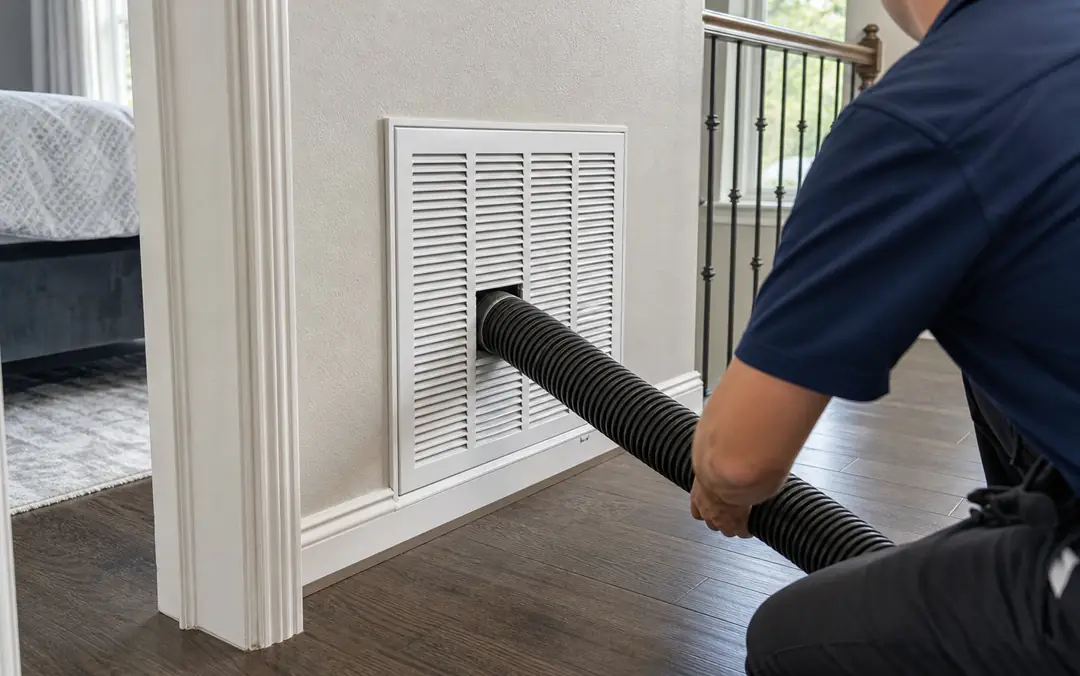
Before approving work, ask what parts of the system the cleaning includes and how the contractor will keep loosened debris from spreading into the home. The EPA describes a proper cleaning as addressing the HVAC system’s components, including the supply and return ducts and registers—not just wiping the visible grille.
Ask the provider to identify the specific material or buildup that justifies cleaning, show you the accessible evidence, and describe the work scope before starting. If someone proposes cleaning without inspecting the condition of the system, ask for a clearer reason and a written description of what will be cleaned.
Does Dallas Weather Change the Air Duct Cleaning Schedule?
Dallas-Fort Worth’s long, hot summers mean central air conditioning can run for extended periods. The National Weather Service’s 1991–2020 normals put the usual July high at DFW Airport at about 96°F, but heavy system use does not automatically mean ducts need cleaning.
Use seasonal tune-ups as a chance to notice filter condition, airflow, and visible debris, not as a reason to order duct cleaning every spring or fall. The deciding signs remain the condition inside the ducts and what is coming from the registers; the National Weather Service’s DFW climate normals explain the local summer conditions.
Need help now? (469) 369-0748
When to Book Air Duct Cleaning in Dallas
Book an inspection when you have visible contamination, pest evidence, or persistent dust and debris blowing from registers. Dallas 24 Hour HVAC offers a $29 inspection for heating or cooling problems; the inspection can help identify whether cleaning is appropriate or whether the cause lies elsewhere.
The air duct cleaning service is the relevant next step when inspection findings support cleaning. For a better sense of possible project costs, read how much air duct cleaning costs; for the decision itself, see whether air duct cleaning is worth it.
What to Check After Air Duct Cleaning
After the work, look at the registers and the areas the contractor said were cleaned. Ask what was removed, which components were included, and whether any visible issue remains; compare those answers with the scope agreed before the job.
If dust continues to come from a register, note the room and when it happens, then check that the filter is installed correctly and in good condition. Continued debris, recurring pest signs, or visible mold should prompt a follow-up inspection rather than repeated cleaning without finding the source.
Frequently asked questions
How often should you change an air filter?
Follow the replacement interval on the filter or the HVAC system instructions, since filter type and system requirements differ. Check that the filter fits properly and faces the right direction; a visibly loaded filter may need attention sooner than its printed schedule.
Can I clean air ducts myself?
You can remove and clean accessible register covers and check the filter, but avoid reaching deep into ductwork or taking apart HVAC equipment. Call an HVAC professional for visible mold inside hard ducts, pest evidence, or debris that continues to blow from registers.
Does a dusty vent mean my ducts need cleaning?
Not necessarily: dust on a grille can collect on the surface without showing that the duct interior needs cleaning. Clean the cover, check the filter, and observe whether excessive dust or debris comes out of the register during normal operation.
What should I ask before hiring an air duct cleaner?
Ask which HVAC components and ducts the job includes, what evidence supports cleaning, and how the work will contain loosened debris. Request a clear scope before work begins so you can compare the promised cleaning with what the technician completes.
Get an Air Duct Inspection
Call Dallas 24 Hour HVAC to check the signs you found and see whether air duct cleaning is the right next step.