
AC Running but Not Cooling the House
An AC running but not cooling the house usually points to a thermostat setting, restricted airflow, or a problem at the outdoor unit. Call us for AC repair after these checks—or sooner for ice or electrical damage.
Need help now? (469) 369-0748
AC Running but Not Cooling: Start With These Safe Checks
Set the thermostat to Cool and lower the target temperature several degrees below the room temperature. Set the fan to Auto rather than On; On can keep air moving between cooling cycles and make the supply air feel less cool.
Next, check whether the air filter is loaded with dust and whether supply registers are open. A clogged filter can restrict airflow across the system. The U.S. Department of Energy says cleaning or replacing a dirty filter can lower an air conditioner’s energy use by 5 to 15 percent; that figure is about energy use, not a promise that a filter will fix every cooling problem. See its Home Cooling 101 guide for filter and outdoor-unit guidance.
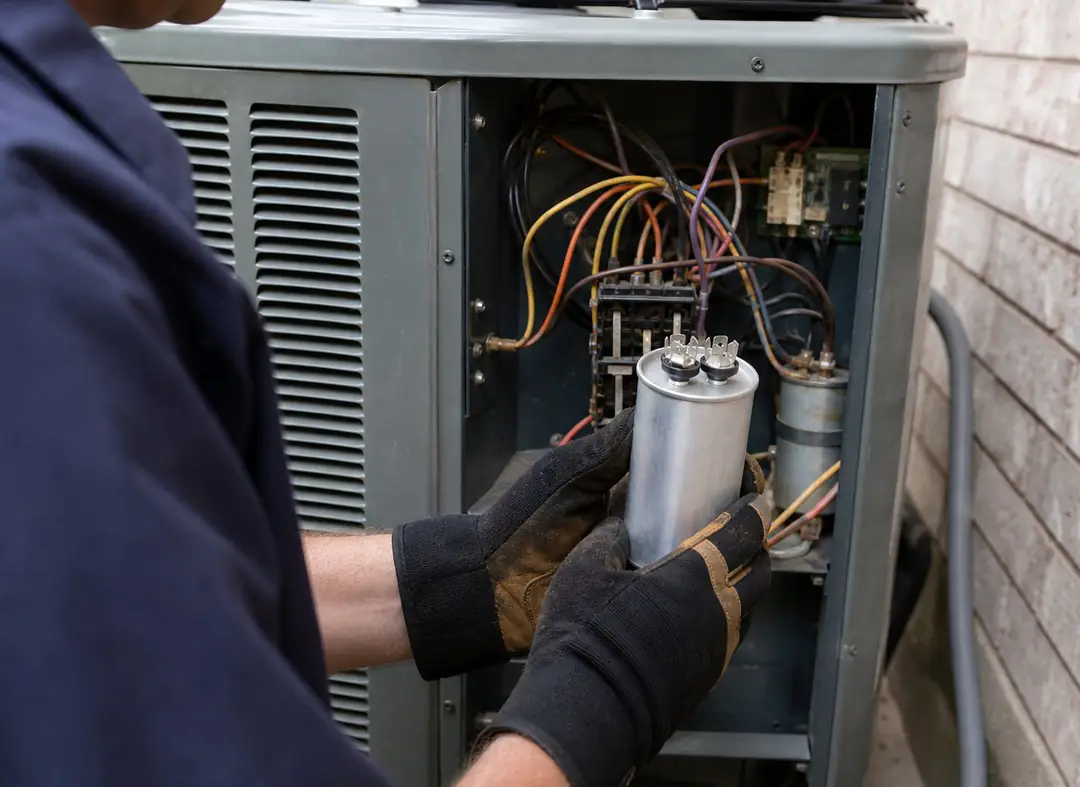
Look at the outdoor unit from a safe distance. Remove loose leaves or objects around its exterior, but do not reach through the grille, remove panels, or spray electrical parts. If the unit is silent, making an unusual noise, or visibly damaged, leave it off and arrange an inspection.
AC Running but Not Cooling: Follow This Owner-Safe Checklist
- Read the thermostat display — Confirm it is set to Cool, not Heat or Fan, and that the target temperature is below the room reading. Check whether the display is blank or showing a low-battery warning.
- Check the fan setting — Use Auto while testing cooling. If the fan is set to On, change it to Auto and check whether air still comes from the registers during a cooling cycle.
- Inspect the return-air filter — Turn the system off before removing the filter. If it is visibly packed with dust, replace it with the same size and airflow direction shown on the frame; then check whether airflow improves.
- Open supply registers — Make sure room vents are not shut or covered by rugs, furniture, or curtains. Check for a stronger, steadier airflow after clearing the obstruction.
- Look for ice without touching it — Check the indoor unit and the larger insulated refrigerant line for visible frost or ice. If you find ice, turn cooling off; running an iced system can worsen the problem. Do not chip or melt ice with tools.
- Check for water near the indoor unit — Look at the floor and the area around the indoor equipment without opening the cabinet. If water is near wiring or other electrical components, switch the system off at the thermostat and keep clear.
- Observe the outdoor unit — From outside the grille, note whether the fan is turning and whether leaves or other debris block the unit’s exterior. Do not put your hands inside or remove its cover; report what you observed when booking service.
- Recheck the room after a short cooling cycle — Once the filter and registers are clear and there is no ice or electrical concern, run the system and check whether airflow and room comfort improve. If the air remains warm or the system stops again, turn it off and request a diagnosis.
What Warm Air, Weak Airflow, and Ice Say About an AC Problem
The symptom helps narrow down what to report, but it cannot identify a failed part by itself. Share what changed, how long the system ran, and whether the outdoor unit was operating.
- Weak airflow at several vents — Check the filter and return-air path first. If airflow stays weak with a clean, correctly installed filter and open registers, the restriction may be inside the equipment or ductwork.
- Normal airflow, but the air feels warm — Confirm the thermostat mode and target temperature. If those settings are correct, the system may need a professional diagnosis rather than more thermostat adjustments.
- Frost or ice on the indoor unit or line — Stop cooling and do not scrape the ice. Ice can accompany an airflow or equipment problem, and the system needs to be checked before you resume cooling.
- Water around the indoor equipment — Switch the system off if water is close to electrical parts. A drain or safety-switch issue can interrupt operation, so report the water and whether the AC stopped.
- Outdoor unit is silent or making a new sound — Do not open the unit or try to repair its wiring. Note the sound or lack of operation and arrange service if basic thermostat and filter checks do not resolve the issue.
Need help now? (469) 369-0748
Choose the Next Step for an AC That Still Runs Warm
Use the simplest option that matches what you found. A filter or thermostat correction is an owner-level check; ice, electrical concerns, repeated shutdowns, or warm air after those checks call for a technician.
Filter or register was blocked
Replace the dirty filter with the correct size or clear the blocked vent, then check airflow. If the system still cannot cool, do not keep changing settings to compensate.
Ice, water, or a safety shutdown appeared
Turn cooling off and arrange an inspection. Give the technician the location of the ice or water and note whether the system stopped by itself.
The outdoor unit is not operating normally
Leave panels and wiring alone and request a diagnosis. Our AC repair service starts with a $29 inspection for an AC repair problem.
The system cools but the room still feels uncomfortable
Check airflow room by room and note whether some vents feel different from others. The 20 degree rule for AC and what your vents should read covers one way to compare vent and room temperatures.
Why a Dallas AC Can Struggle During Long Summer Runs
Dallas-Fort Worth AC systems face long cooling cycles during hot weather. The National Weather Service’s 1991–2020 normals put the normal July high at DFW Airport at about 96°F, and central AC commonly runs long cycles from June into September. A filter that has collected dust or an outdoor unit crowded by debris can matter more when the system runs for extended periods.
The weather does not prove that heat caused a breakdown. It does make repeated warm air, weak airflow, ice, or frequent shutdowns worth addressing rather than letting the system run unattended. The National Weather Service’s DFW climate normals provide the local temperature context.
When an AC Running Without Cooling Needs a Technician
Stop troubleshooting and turn cooling off if you see ice, water close to electrical components, damaged wiring, smoke, or smell something burning. Do not remove equipment panels, handle wiring, or try to force a stuck part to move. Those checks belong to a technician with the right tools.
Call for service when the thermostat, filter, and registers check out but the air stays warm; when the outdoor unit will not run normally; or when the system repeatedly shuts down. Tell us whether the indoor fan runs, whether you found ice or water, and what you already checked. That information helps focus the inspection.
Need help now? (469) 369-0748
How a Split System Heating and Cooling Setup Relates to Warm Air
A split system has indoor and outdoor equipment working together, so a problem at either part can affect cooling at the vents. Check the thermostat and filter indoors, then observe the outdoor unit without opening it. A running indoor fan does not by itself confirm that the complete cooling system is operating correctly.
For homes with a heat pump, the thermostat can also control heating and cooling modes. Verify that the display says Cool before judging the system’s cooling performance; do not switch modes repeatedly as a substitute for diagnosis.
What to Tell the AC Repair Technician About Warm Air
Describe when the problem began, whether it affects every room or only a few, and whether airflow is strong or weak. Mention any thermostat warning, ice, water, new sound, or recent filter change. These observations help separate a basic airflow concern from a system that needs closer inspection.
Dallas 24 Hour HVAC is open 24 hours a day, 7 days a week, and owner Michael Anderson has 28 years of heating and air conditioning experience. Call (469) 369-0748 to arrange an inspection; the AC repair inspection is $29.
Frequently asked questions
Should I turn off an AC that is running but not cooling?
Turn cooling off if you see ice, water near electrical parts, damaged wiring, or smell something burning. If none of those signs is present, you can check the thermostat, filter, and open registers; stop and request service if the AC still blows warm air.
Can a dirty air filter make my AC run without cooling the house?
Yes, a heavily clogged filter can restrict airflow and interfere with normal cooling. Replace it with the correct size and airflow direction, then check whether airflow improves; persistent warm air needs a further diagnosis.
How does a split system handle heating and cooling?
A split system uses indoor and outdoor equipment to condition and move air through the home. Check that the thermostat is set to Cool when testing AC; an indoor fan running alone does not show that the whole cooling system is working.
When should I stop checking the AC and book a repair?
Book service when warm air continues after you confirm the thermostat setting and clear a dirty filter or blocked register. Stop sooner for ice, water near electrical components, electrical damage, smoke, or a burning smell.
Get the AC Checked
Call (469) 369-0748 to arrange an AC repair inspection for $29.