
How to Tell If an AC Compressor Is Bad
You can suspect an AC compressor is bad when the outdoor unit hums or clicks, trips a breaker, or runs without cooling—but other faults can cause the same signs. Call Dallas 24 Hour HVAC for a $29 inspection.
Need help now? (469) 369-0748
How to Tell If an AC Compressor Is Bad From the Symptoms
The compressor moves refrigerant through the cooling system, but a symptom alone cannot prove that it has failed. A capacitor, power issue, thermostat setting, or airflow problem can also stop the system from cooling normally.
- The outdoor unit hums or clicks but does not start — Repeated humming or clicking can mean the compressor is trying to start, but it can also point to a failed starting component or an electrical problem. Do not open the unit to investigate.
- The outdoor fan runs, but the house stays warm — A running fan does not establish that the compressor is operating. Check whether the indoor vents are moving air, then note whether the outdoor unit keeps running without cooling the rooms.
- The breaker trips when the AC starts — A tripped breaker may indicate an electrical fault or a component drawing too much current. Leave the breaker off if it trips again rather than repeatedly resetting it.
- The system makes a new loud mechanical sound — Grinding, banging, or persistent loud buzzing is a reason to switch the system off at the thermostat. A sound can help a technician narrow down the issue, but it does not identify the failed part by itself.
Eight Safe Checks Before You Call About an AC Compressor
Keep your checks to the thermostat, filter, and visible parts of the outdoor unit. Do not remove access panels, touch wiring, or try to test internal components.
- Set the thermostat to cooling — Check that the system is set to Cool and the target temperature is below the room temperature. If the display is blank or settings keep changing, note that before calling.
- Check whether the indoor blower moves air — Hold a hand near a supply register without putting anything inside it. Little or no airflow points toward an indoor airflow issue, so do not assume the compressor is the cause.
- Look at the air filter — A visibly clogged filter can restrict airflow. Replace or clean it according to the filter instructions, then see whether airflow changes.
- Observe the outdoor unit from a safe distance — Note whether the fan spins, whether the unit is silent, and whether you hear repeated clicks or a steady hum. Keep hands, tools, and objects away from the unit.
- Check the visible area around the unit — Look for leaves or other debris close to the outdoor unit without reaching through its grille. Clear loose debris around the outside only, and do not remove a cover or bend the fins.
- Check the thermostat display for an alert — Write down any displayed message or error code rather than trying to reset an unfamiliar setting. The exact wording can help distinguish a control issue from a mechanical symptom.
- Listen for the startup sequence once — From a safe spot, note whether the indoor blower starts, the outdoor fan starts, or the system clicks and stops. Do not keep switching the system on and off to repeat the test.
- Stop if the breaker trips or the sound is severe — Leave the system off if a breaker trips again or the unit makes a harsh mechanical noise. Record what happened and arrange an HVAC inspection instead of opening the equipment.
Which AC Problem Can Mimic a Bad Compressor?
These problems can produce overlapping symptoms, so compare what you can observe without taking the equipment apart. The distinction matters: replacing a compressor would not correct a separate thermostat, airflow, or starting-component fault.
Possible compressor failure
The outdoor unit may fail to start or may run without cooling, but those signs are not a diagnosis. A technician needs to test the system components to establish whether the compressor itself has failed.
Possible starting-component fault
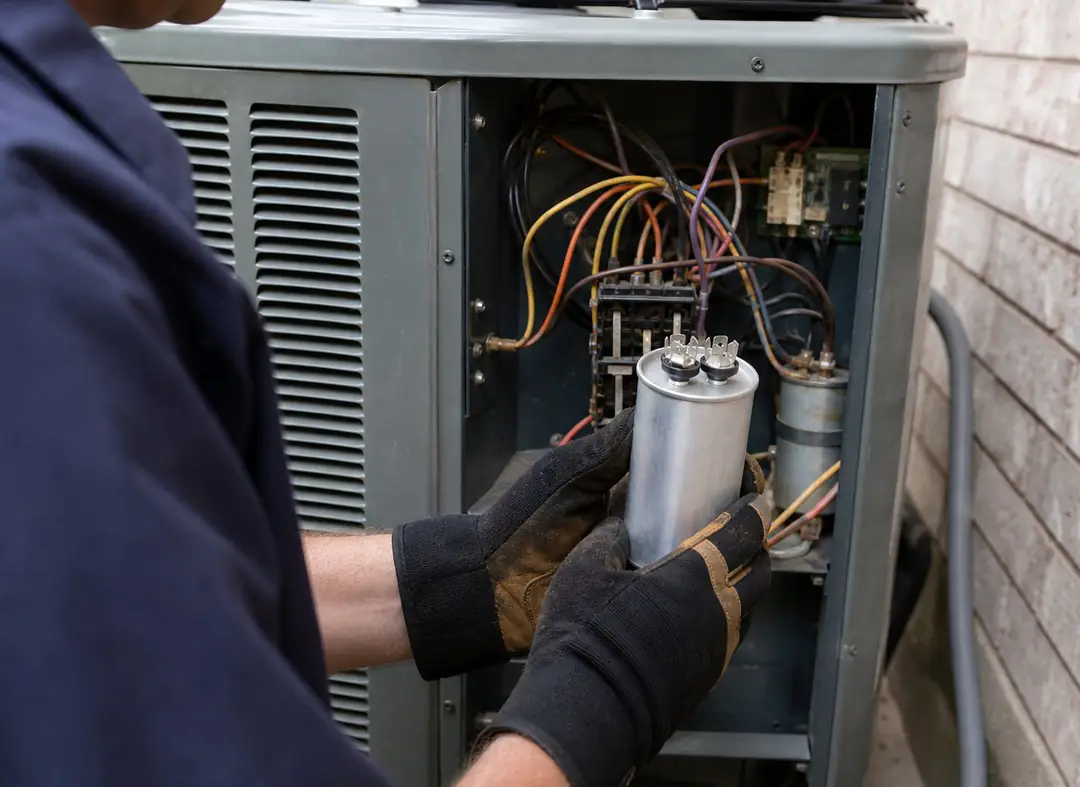
A hum or click followed by no normal startup can point to a starting component as well as the compressor. Keep the unit closed and report the sound and sequence you observed.
Possible airflow or thermostat issue
Weak airflow, a dirty filter, or a thermostat set incorrectly can make rooms feel warm even when the outdoor unit is operating. Check the filter and settings before concluding that the compressor is bad.
Possible power problem
A unit that stops after a breaker trips may have an electrical issue that needs professional diagnosis. A breaker that trips again is a stop sign, not a cue to keep resetting it.
Need help now? (469) 369-0748
Why Dallas Summer Heat Makes These Symptoms Urgent
Dallas-Fort Worth air conditioners work through long cooling cycles during the hot season. The National Weather Service’s 1991–2020 normals put the July high at DFW Airport at about 96°F, and the agency notes that central AC can run long cycles from June into September; see its DFW climate normals.
That sustained demand makes it useful to note whether the unit starts and stops, runs continuously, or never starts. Do not keep operating a unit that trips a breaker or makes a severe new noise just to see whether it will recover. For a separate check of vent temperature, see the 20 degree rule for AC and what your vents should read.
When a Compressor Repair or Replacement Makes Sense
The symptom does not determine whether a repair or replacement is appropriate; the confirmed fault does. Ask for the diagnosis and the proposed work before making a decision, especially when the system has stopped cooling altogether.
Choose repair when testing identifies another failed part
A starting component, control, or airflow problem can resemble compressor trouble. Repairing the actual cause avoids treating a symptom as proof that the compressor needs replacement.
Consider compressor replacement only after diagnosis
A technician should establish that the compressor has failed and explain what the replacement work includes. Ask how the recommendation addresses the cause of the failure, not just the noise or lack of cooling.
Compare full-system replacement when other problems are present
If the system has more than one significant fault, ask for a comparison of the repair and replacement choices. The age and condition of the equipment and the scope of each option are useful details for that decision.
What Not to Do When the Outdoor Unit Will Not Start
Opening an outdoor unit can expose live electrical parts, and repeated attempts to run a failing system can add risk without identifying the fault. Stick to observations and simple thermostat or filter checks.
- Do not keep resetting a tripped breaker — If it trips again, leave it off and arrange service. Repeated resets do not reveal why it tripped.
- Do not remove the electrical access panel — Leave internal wiring and components to an HVAC technician. A visual check from outside the closed unit is enough for an owner-level inspection.
- Do not force the fan or put tools through the grille — The fan and other components can move or remain electrically energized. Keep fingers and objects outside the grille, even when the unit appears off.
- Do not assume a warm room proves compressor failure — A dirty filter, control setting, or another system fault may also affect cooling. Share your observations so the technician can test the cause.
Need help now? (469) 369-0748
When to Arrange AC Repair for a Suspected Compressor Problem
Call for AC repair service when the outdoor unit repeatedly hums or clicks without starting, the breaker trips, or the AC runs but does not cool after you check the thermostat and filter. Dallas 24 Hour HVAC is open 24 hours a day, 7 days a week, and serves Dallas and towns within 40 miles.
A $29 inspection covers a heating or cooling problem. When you call, report what the indoor blower and outdoor unit did, whether the breaker tripped, any new sounds, and what you checked; those details give the technician a clearer starting point.
What to Record Before Your AC Compressor Inspection
Write down when the problem began and whether it happens every time the AC starts or only after it has run for a while. Note the thermostat setting, whether air comes from the vents, what the outdoor unit does, and any alert on the thermostat.
If you are comparing repair costs, an inspection is the first useful step because a compressor-like symptom can come from a different part. Dallas 24 Hour HVAC lists a $29 inspection for AC repair; the compressor replacement price depends on what the diagnosis establishes. For another local pricing topic, see HVAC service call cost in Dallas. Use contact us to arrange service.
Frequently asked questions
Can a bad capacitor look like a failed compressor?
Yes. A starting-component problem can cause humming or clicking and prevent the outdoor unit from starting, which can resemble compressor trouble. The unit needs professional testing to identify which part has failed.
Should I keep running the AC if the outdoor unit is humming?
Turn the system off if the hum continues without normal operation, or if you hear a severe new noise. Do not open the unit or repeatedly restart it; note what happened and arrange an inspection.
What does it cost to replace an AC compressor?
The symptom alone cannot establish a replacement price because the fault needs to be diagnosed first. Dallas 24 Hour HVAC lists AC repair inspection at $29; ask about the repair price after the problem is identified.
Does Dallas summer heat make compressor symptoms more noticeable?
Long cooling cycles can make a system issue easier to notice during North Texas summer heat. The National Weather Service’s July normal high at DFW Airport is about 96°F, so record whether the unit starts, stops, or runs without cooling.
Get Help With AC Compressor Symptoms
Call (469) 369-0748 to arrange AC repair when the outdoor unit will not start or the system is not cooling.