
Do Air Purifiers Help With Dust?
Yes—an air purifier can capture some airborne dust, but it cannot remove dust already settled on surfaces or fix a dusty HVAC system. Call us at (469) 369-0748 if dust keeps blowing from your vents; we can inspect a heating or cooling problem for $29.
Need help now? (469) 369-0748
Do Air Purifiers Help With Dust In The Air?
A portable air purifier can capture some dust particles while they are airborne. It will not pick up dust on floors, shelves, or furniture, and it cannot stop dust from entering a room or escaping from leaky ductwork.
That distinction matters because dust settles quickly. A purifier may reduce the particles that pass through its filter, while regular surface cleaning and finding the source address the dust you can see. The U.S. Environmental Protection Agency’s guide to air cleaners in the home explains what portable air cleaners and furnace filters can and cannot remove.
Which Dust-Control Option Fits Your Room?
Choose the tool based on where the dust is and how it moves. A purifier, a properly maintained HVAC filter, and cleaning the room solve different parts of the problem.
Portable air purifier
Use one when you want to capture airborne particles in a specific room. Check that the unit is sized for that room and that its filter is installed correctly; it will not clean dust from other rooms or surfaces.
HVAC system filter
Use the filter recommended for your equipment to catch particles moving through the system. A filter that is dirty, damaged, or poorly fitted can leave gaps for dust to pass through; check your system’s manual before changing filter type.
Surface cleaning and source checks
Use damp dusting and vacuuming to remove settled dust. If dust appears to come from supply registers, look for visible debris or a filter that does not fit rather than expecting a room purifier to correct the HVAC system.
What To Check Before Buying An Air Purifier For Dust
A purifier is most useful when it matches the room and the particles you want it to capture. Check these details before choosing one.
- Room size — Compare the manufacturer’s recommended room area with the room where you plan to run the purifier. A unit intended for a small room may not clean the air effectively in a large open space.
- Filter type and replacement — Read the product details to learn what its filter captures and how often it needs replacement. Include the cost and availability of replacement filters in your decision.
- Airflow and placement — Leave the air intake and outlet unobstructed. A purifier placed behind furniture or close to a wall contrary to its instructions may not circulate room air as intended.
- Your actual dust pattern — Notice whether dust gathers on surfaces, appears right after the HVAC runs, or returns quickly near a register. That pattern helps distinguish ordinary settled dust from a possible filter, duct, or system concern.
Need help now? (469) 369-0748
How To Set Up A Purifier And Check Your HVAC Filter
Start with simple checks that do not require opening equipment or reaching into ductwork. Use the owner’s manuals for both the purifier and HVAC system.
- Note where dust appears — Check the room’s shelves, floor, and supply registers before cleaning. This gives you a baseline and helps show whether dust is mostly settling in one area or repeatedly appearing at a vent.
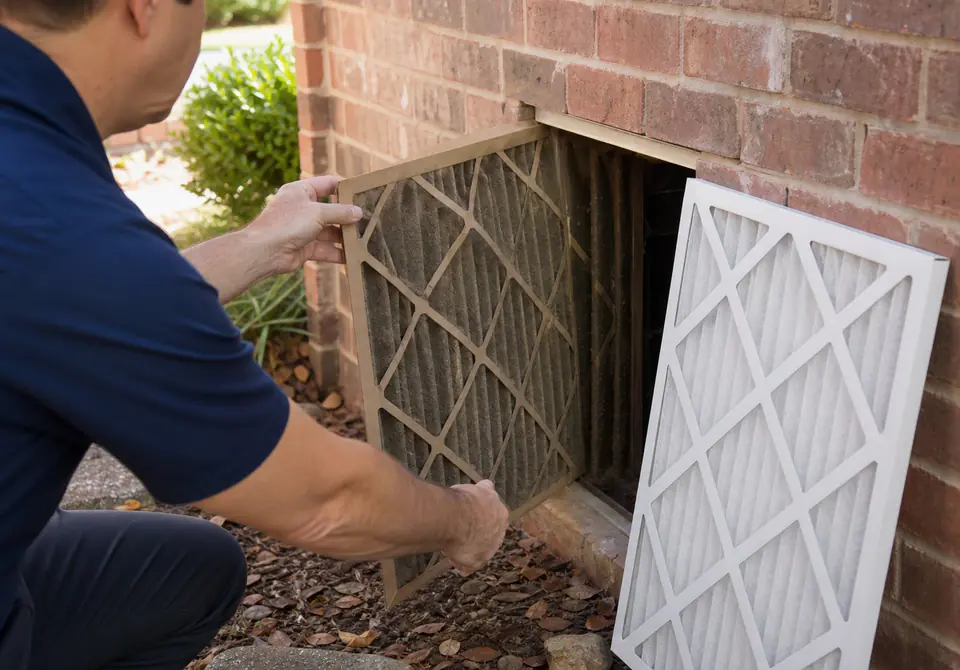
- Check the HVAC filter location — Find the filter slot or return grille identified in your system manual. Do not remove equipment panels or reach inside the unit; confirm you have the correct filter size and orientation before handling it.
- Inspect the filter — Look for heavy buildup, tears, gaps around the frame, or a filter installed backward. Replace it only with the type and size specified for your system, then check that the frame sits flat without open edges.
- Review the replacement schedule — Use the interval in the HVAC manufacturer’s instructions and check the filter more often when it looks loaded. Our guide to how often to replace your air filter covers the signs that it may be time for a change.
- Place the purifier correctly — Set it in the room where you want cleaner air, with clear space around the intake and outlet as its manual specifies. Check that furniture, curtains, and rugs do not block the airflow.
- Install the purifier filter — Follow the arrows and instructions on the filter and purifier. Check that the filter is seated fully and that the cover closes as designed; a loose filter can let air bypass it.
- Run the unit and observe — Use the operating setting recommended for the room and note whether airborne dust or dust near the purifier changes. Keep cleaning settled dust separately, because a purifier does not remove particles already on surfaces.
- Recheck vents and filter fit — After the system has run, look for fresh debris at registers and confirm the HVAC filter still fits snugly. If dust continues to blow from vents, stop treating the purifier as the fix and arrange an HVAC inspection.
How An Air Purifier Differs From Your HVAC Filter
A portable purifier treats air in the room where it operates. The HVAC filter catches particles moving through the heating and cooling system, so it serves the whole system’s airflow rather than one room alone.
A filter that is clogged or installed incorrectly can restrict or bypass airflow, so follow the equipment manufacturer’s instructions instead of choosing a denser filter without checking compatibility. The U.S. Department of Energy says replacing or cleaning a dirty filter can lower an air conditioner’s energy use by 5 to 15 percent; that figure is about energy use, not a promise that dust will disappear.
The Department of Energy’s Home Cooling 101 guide covers filter care. For a specific replacement interval, use your equipment instructions and see our guide to when to replace an HVAC air filter.
When Dust From Vents Calls For An HVAC Check
A little dust on a register does not by itself prove that the ducts need cleaning. The EPA says duct cleaning makes sense when there is visible mold growth inside hard ducts or other system parts, ducts are infested with insects or rodents, or registers release excessive dust or debris.
Do not brush inside ducts or run the system to blow visible debris around. If you see one of those signs, or dust repeatedly comes from the supply vents after you have checked the filter, an HVAC professional can inspect the system and determine what is causing it. Our indoor air quality service is the related service for concerns involving air and HVAC components.
Need help now? (469) 369-0748
What Can Make Dust Worse After You Add A Purifier?
A purifier can disappoint when the cause is outside its job. Check for these common setup problems before assuming you need a larger unit.
- The purifier is too small for the room — A unit meant for a smaller space may not move enough air for the room you are trying to clean. Recheck the room-size guidance in its manual.
- The intake or outlet is blocked — Furniture or curtains can interfere with circulation. Move the unit according to its instructions and make sure air can reach its intake and leave its outlet.
- The filter is overdue or not seated — A loaded or misinstalled purifier filter can reduce performance or let air bypass the filter. Check its condition and installation using the product manual.
- The dust source is still active — A purifier cannot fix a damaged HVAC filter, gaps around a filter frame, or debris entering from another source. Check the HVAC filter and note whether new dust appears at registers.
What To Do Next When Dust Keeps Returning
Clean the room, check the HVAC filter’s condition and fit, and run the purifier in the affected space with its airflow unobstructed. If dust returns mainly at a supply register, or you see visible debris or growth inside an accessible part of the system, arrange an HVAC inspection rather than trying to clean inside the ducts yourself.
Dallas 24 Hour HVAC serves Dallas and towns within 40 miles, and is open 24 hours a day, 7 days a week. Call (469) 369-0748 about recurring dust from vents or another heating and cooling concern; the inspection for a heating or cooling problem is $29.
Frequently asked questions
What do air purifiers do besides help with dust?
A portable air purifier draws room air through its filter and can capture some particles the filter is designed to catch. What it removes depends on the unit and filter, so check the manufacturer’s product information rather than assuming it handles every kind of indoor pollutant.
How can I tell mold from dust in an air vent?
Color or a photo alone may not reliably identify a substance. Do not disturb suspected growth inside the HVAC system or run the system to circulate it; arrange an HVAC inspection to identify the concern and its source.
What causes dust to keep coming back?
Dust can settle from ordinary indoor activity, while a poorly fitted or heavily loaded HVAC filter may allow particles to pass through. If dust appears repeatedly at supply vents, check the filter fit and note the location before arranging an HVAC inspection.
Will an air purifier remove dust that has settled on furniture?
No. A purifier filters airborne particles that pass through it, but settled dust needs to be removed from surfaces with cleaning. Keep the purifier’s airflow clear so it can circulate room air.
Dust Still Coming From Your Vents?
Call (469) 369-0748 to arrange a $29 inspection for a heating or cooling problem.