
Air Conditioner Not Blowing Cold Air: Causes and Fixes
An air conditioner not blowing cold air may have a thermostat or filter issue, but an outdoor-unit or internal fault needs a technician. Call us for a $29 inspection of a heating or cooling problem; we check the system to identify the cause.
Need help now? (469) 369-0748
Why an Air Conditioner Is Not Blowing Cold Air
Warm air can come from a thermostat set to the wrong mode, a clogged air filter, or a problem with the outdoor unit. A lack of airflow points toward a different issue than strong airflow that simply feels warm, so notice what the system is doing before you change settings.
A dirty filter can restrict airflow through the system. The U.S. Department of Energy says cleaning or replacing a dirty filter can reduce an air conditioner’s energy use by 5 to 15 percent; use the correct filter size and follow the equipment instructions rather than forcing a filter into place.
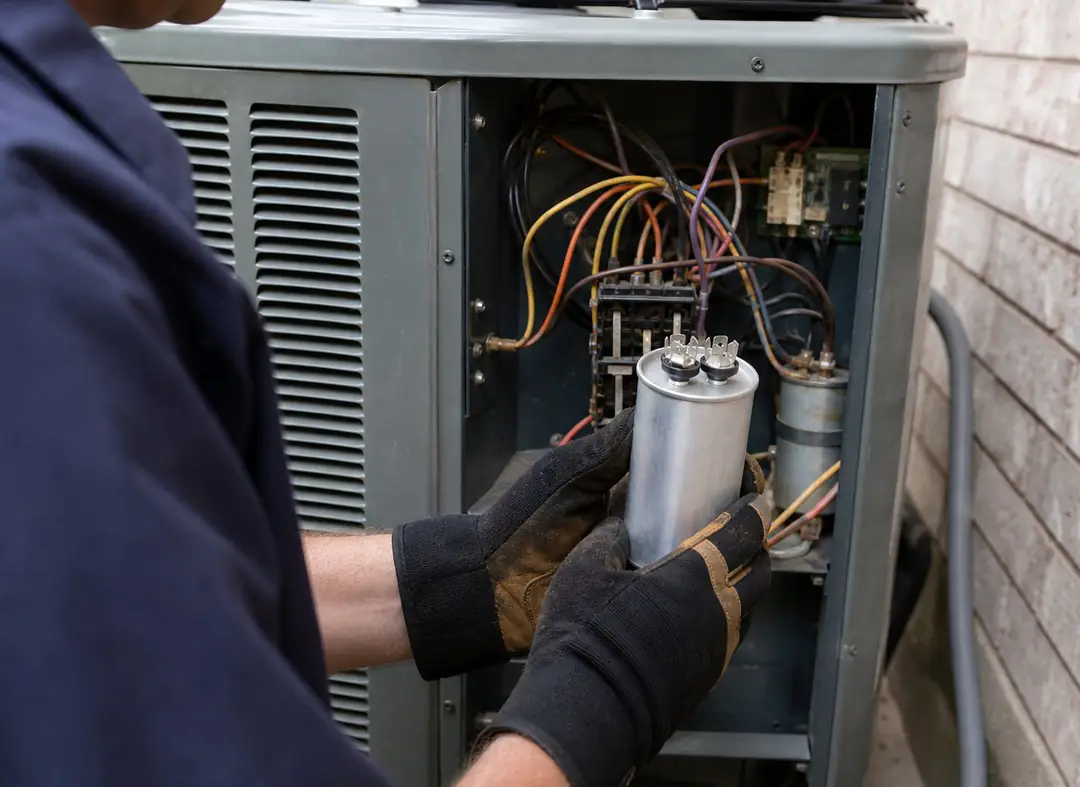
Other causes require a technician to inspect the equipment. A frozen indoor coil, a clogged condensate drain that has activated a float switch, or a failed electrical component can interrupt cooling. Do not open equipment panels or handle wiring or refrigerant.
What to Check Before Calling About Warm AC Air
- Thermostat settings — Confirm the mode is set to Cool and the fan is set to Auto. Check that the set temperature is below the room temperature; replace thermostat batteries only if your model uses them and indicates they are low.
- Air filter — Look for heavy dust on the filter and check its size before replacing it. Make sure the airflow arrow points in the direction marked on the equipment or filter slot.
- Supply and return vents — Check that supply registers are open and that furniture or other items are not blocking the larger return grilles. Compare airflow in more than one room to see whether the problem affects the whole home or a single area.
- Outdoor unit — From outside, look for obvious debris blocking the unit or a fan that is not running while the system calls for cooling. Do not reach through the grille or remove a panel; switch the system off before clearing loose debris around the unit.
Seven Safe Steps to Troubleshoot an AC That Blows Warm Air
- Check the thermostat mode — Set the thermostat to Cool and the fan to Auto. Check the display again to confirm it shows the settings you selected.
- Compare the room and set temperatures — Read the room temperature on the thermostat and confirm the set temperature is lower. If the thermostat display is blank or inconsistent, check its batteries if applicable.
- Inspect the filter — Turn the system off before removing the filter. Replace a visibly dirty filter with the correct size, then check that it sits securely without gaps.
- Check the vents — Open supply registers and move objects away from return grilles. After restarting the system, check whether airflow improves in the rooms that felt warm.
- Look at the outdoor unit from a safe distance — Check for visible obstruction or unusual silence when cooling is on. Do not put your hands inside the grille or try to start the fan yourself.
- Stop if you see ice or water — Turn cooling off if ice is visible on the indoor coil or refrigerant lines, or if water is collecting around the equipment. Do not chip ice away or keep restarting the system.
- Check for a repeated breaker trip — If the AC breaker has tripped, do not reset it repeatedly. Leave the system off and arrange service; repeated trips point to an electrical or equipment problem that needs diagnosis.
Need help now? (469) 369-0748
What Warm Air and Weak Airflow Can Tell You
Weak airflow throughout the home
A dirty filter or an airflow restriction may be limiting air movement. Check the filter and vents first; if airflow stays weak with a clean, correctly installed filter, the system needs a closer inspection.
Normal airflow, but the air feels warm
Confirm the thermostat is calling for cooling and the outdoor unit is operating. If those checks do not explain the warm air, an AC component or cooling-system fault may be involved.
One room stays warm
Compare that room’s supply airflow with nearby rooms and make sure its register is open. If the rest of the home cools normally, mention the room-specific pattern when you request service.
Ice on the coil or pipes
Ice means you should stop cooling rather than keep running the system. A technician needs to find the cause before normal operation resumes.
When to Stop Troubleshooting and Get AC Repair
Keep troubleshooting simple
Thermostat settings, a filter, and blocked vents are owner-level checks. Stop there if you find ice, water near the equipment, a breaker that trips again, or a unit that will not start.
Call for a system diagnosis
A technician should check electrical parts, cooling components, and the condensate system rather than having you open the cabinet or handle internal parts. Our AC repair service is for cooling problems that remain after safe checks.
Use temperature readings as a clue, not a diagnosis
A vent reading can help describe the problem, but it does not identify a failed part by itself. See the 20 degree rule for AC and what your vents should read for context on temperature comparisons.
What AC Repair Costs Depend On
The repair price depends on what has failed, so a warm-air symptom alone is not enough to price the work. A thermostat setting or filter check is different from a confirmed electrical or cooling-system repair. We charge for a heating or cooling problem inspection, and the inspection helps identify the cause before repair work is decided.
For a Dallas comparison, Angi’s HVAC repair cost guide reports typical local prices of $105–$260 for AC capacitor replacement and $75–$205 for drain line cleaning. Those are market figures, not our prices. Dallas 24 Hour HVAC lists AC capacitor replacement from $125; see the HVAC service call cost in Dallas article for more on inspection charges.
Need help now? (469) 369-0748
Why Dallas AC Problems Show Up During Long Cooling Runs
In hot weather, an air conditioner can run for long stretches, making a small airflow or cooling problem harder to ignore. Check the filter and outdoor unit without opening the equipment, and pay attention to whether the system’s airflow changes or cooling stops altogether.
Once cooling returns, keep the filter clean and the outdoor unit free of visible obstructions. The Department of Energy’s Home Cooling 101 guide explains filter care and keeping the outdoor unit clear. If the same warm-air problem returns after basic checks, record what you noticed and request service rather than repeatedly restarting the system.
What to Tell the AC Technician About the Cooling Failure
Share whether the system has no airflow or strong airflow that feels warm, whether one room or the whole home is affected, and whether you saw ice or water. Mention any thermostat changes, filter replacement, or breaker trip; those details help narrow down where to inspect.
For an unresolved cooling problem, call Dallas 24 Hour HVAC or contact us to request an inspection. We serve Dallas and towns within 40 miles, and we are open 24 hours a day, 7 days a week.
Frequently asked questions
What is the average cost to repair an air conditioner?
There is no single useful average because a filter restriction, drain issue, capacitor failure, and larger system fault require different work. Angi’s Dallas guide lists typical local prices for some specific repairs, including capacitor replacement and drain line cleaning, but those figures are not a quote for your system.
How much does an AC compressor replacement usually cost?
The price depends on the system and the work required, and a technician needs to confirm the compressor has failed before quoting a replacement. A capacitor or another electrical issue can also affect how an AC starts or cools, so a symptom alone is not enough to diagnose a compressor.
What affects the cost of replacing an AC capacitor?
The diagnosis matters because weak cooling or a unit that will not start does not prove the capacitor is the cause. Dallas 24 Hour HVAC lists AC capacitor replacement from $125; Angi’s Dallas HVAC repair guide reports a typical local range of $105–$260.
Should I keep running the AC if it is blowing warm air?
Turn cooling off if you see ice, water around the equipment, or a breaker that trips again, and do not open the unit to investigate. For warm air that continues after checking the thermostat, filter, and vents, arrange an inspection instead of repeatedly restarting the AC.
Get the Cooling Problem Checked
Call Dallas 24 Hour HVAC to request an inspection for an AC that will not cool. We serve Dallas and towns within 40 miles.