
What Is a Split System Air Conditioner?
The answer to “what is a split system air conditioner?” is a system with an indoor section and an outdoor section that work together to cool your home. Call (469) 369-0748 about AC installation; this guide compares ducted, ductless, and heat-pump setups.
Need help now? (469) 369-0748
What Is a Split System Air Conditioner Made Of?
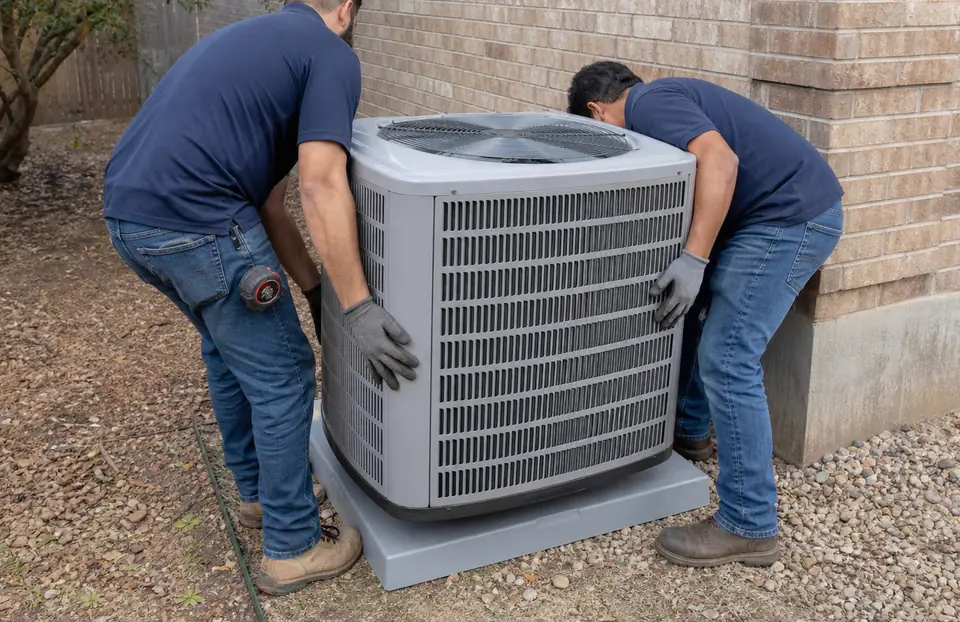
A split system has equipment indoors and outdoors. In a typical ducted setup, the outdoor unit releases heat from the home, while an indoor coil and blower move cooled air through ducts to rooms. Insulated tubing, wiring, and a condensate drain connect the equipment.
The thermostat tells the system when to run. The indoor filter catches airborne particles before air passes through the equipment, so a dirty or incorrectly sized filter can restrict airflow. The U.S. Department of Energy says replacing or cleaning a dirty filter can lower an air conditioner’s energy use by 5 to 15 percent; check the filter’s fit and condition before assuming the system needs replacement.
Which Split System Setup Fits Your Home?
The main choice is how the system delivers conditioned air and whether it provides heating as well as cooling. Existing ducts, room-by-room comfort, and the type of indoor equipment you have help narrow the options.
Ducted central split system
An indoor air handler or furnace moves air through ducts to multiple rooms. This setup may fit a home that already has usable ductwork; have the ducts checked for leaks and damage before pairing them with new equipment.
Ductless mini-split
Indoor wall-mounted units deliver air directly to the spaces they serve, without a duct network. It can suit an addition or a room that is difficult to condition through existing ducts; ask how many indoor units the layout needs.
Split-system heat pump
A heat pump provides cooling and can also provide heat by reversing its operation. It may be worth comparing when you want one system for both seasons; ask how the proposed equipment handles heating during cold weather.
What Should You Compare Before Choosing a Split System?
A system that matches the equipment already in place is not automatically the best fit. Gather a few details about your home so an HVAC professional can compare the layout, airflow, and heating and cooling needs.
- Duct condition — Note rooms that are consistently stuffy, ducts that are visibly damaged, and any areas with weak airflow. ENERGY STAR says leaky ducts can reduce heating and cooling efficiency by up to 20 percent; ask whether accessible ducts need repair or sealing.
- Room-by-room comfort — Write down rooms that are too warm or too cool and when the problem occurs. This can help distinguish a ducted system’s airflow issue from a layout where separate ductless indoor units may be considered.
- Existing equipment — Record the thermostat type and take photos of equipment labels only when they are safely accessible. The indoor and outdoor units, ductwork, and controls all affect what can be reused or must be changed.
- Heating needs — Decide whether you want the replacement to provide heating as well as cooling. A heat pump and a cooling-only setup serve different needs, so have the installer identify exactly what the proposed system includes.
Need help now? (469) 369-0748
How Can You Prepare for a Split System Installation?
These owner-level checks help you describe the home and review the finished installation. Leave wiring, sealed system components, and equipment disassembly to an HVAC professional.
- List comfort problems by room — Use a phone or notepad to record which rooms feel uncomfortable and when. Check whether the pattern affects one room or several, because that clue may point toward a local airflow issue or a broader system concern.
- Identify the current setup — Look for supply registers, return grilles, and the thermostat to tell whether the home uses ducts. Take photos of equipment labels only if they are easy to reach without opening panels or climbing into unsafe areas.
- Check the air filter — Follow the equipment label to find the filter and check whether it is dirty, damaged, or the wrong size. Confirm the replacement fits in the same direction indicated by the airflow arrow.
- Note thermostat settings — Write down the selected mode and temperature, then check whether the display responds to a setting change. If the screen is blank, replace user-accessible batteries only if the thermostat uses them.
- Look at visible ductwork — From a safe, accessible spot, note disconnected, crushed, or visibly damaged ducts. Do not enter a cramped attic or crawl space to inspect them; share the location of any visible damage with the HVAC professional.
- Observe the outdoor unit — From outside, note whether leaves or other loose debris surround the unit and whether it appears visibly damaged. Do not remove panels or reach inside; tell the installer what you see.
- Confirm the proposed system parts — Ask which indoor unit, outdoor unit, thermostat, and ductwork changes are included in the proposed setup. Check that the listed equipment matches your choice of ducted, ductless, or heat-pump operation.
- Check basic operation afterward — Use the thermostat to request cooling and check that air reaches the intended rooms. Look around the indoor equipment for visible water and note unusual sounds; contact an HVAC professional rather than opening the unit.
What Can Go Wrong With a Split System?
A split system depends on more than the outdoor unit. A clogged filter can restrict airflow, a damaged or leaky duct can keep cooled air from reaching rooms, and a drain problem can leave water near indoor equipment. Note what you observe and when it happens instead of taking equipment apart.
If the thermostat calls for cooling but the system does not run, airflow drops suddenly, or water appears around the indoor unit, stop troubleshooting beyond the filter and thermostat checks. Call an HVAC professional for diagnosis; our AC installation service can help when the issue leads you to compare a new setup with the current one.
How Does a Dallas Summer Affect Split System Choice?
The National Weather Service’s 1991–2020 normals put DFW Airport’s typical July high at 95.6°F. That heat means central AC can run long cycles from June into September, making airflow, duct condition, and equipment sizing important considerations when comparing installations. The National Weather Service’s DFW climate normals provide the local temperature context.
Do not select a system by matching the size of the old unit alone. Ask the installer to assess the home and explain how the proposed system fits its layout, ducts, and comfort needs. For other seasonal maintenance guidance, ENERGY STAR’s heating and cooling advice covers filter changes and tune-ups.
Need help now? (469) 369-0748
When Should You Call an HVAC Professional About a Split System?
Call when the system repeatedly fails to cool, airflow remains weak after you check the filter, water appears around indoor equipment, or you are deciding between repairing existing equipment and installing a different type of system. These symptoms can involve parts you should not open or adjust yourself.
For an installation comparison, ask about AC installation and identify the type of system you have, the rooms affected, and any visible duct or water concerns. If you are weighing a repair against replacement, read the 5,000 rule for HVAC: repair or replace? alongside a professional’s evaluation.
What Is the Next Step After Identifying Your Split System?
Use the equipment photos, room-by-room notes, and filter observations to describe what your home needs. Ask the HVAC professional to identify the system type, check the ductwork if present, and state which indoor and outdoor components the installation includes before you compare proposals.
Dallas 24 Hour HVAC provides AC installation and serves Dallas and towns within 40 miles. Contact us about your system with the room concerns and equipment details you gathered.
Frequently asked questions
Can a split system air conditioner work without ducts?
Yes. A ductless mini-split uses one or more indoor units to deliver air directly to the spaces they serve, rather than sending air through ducts. The number and placement of indoor units depend on the layout you want to condition.
Is a heat pump a type of split system?
Yes. A split-system heat pump has indoor and outdoor equipment and can provide both cooling and heating. Ask an HVAC professional how the proposed system is designed to meet your home’s heating needs.
Can I replace only the outdoor unit?
Do not assume the outdoor unit can be replaced by itself. The indoor coil or air handler, controls, and existing system all matter, so have an HVAC professional check compatibility before deciding what to replace.
What is the 5,000 rule for HVAC?
It is a rule of thumb people use to compare a repair bill with the system’s age, but it is not a substitute for checking the equipment’s condition and repair needs. See the 5,000 rule for HVAC and have an HVAC professional evaluate your system before choosing.
Compare Your AC Installation Options
Call (469) 369-0748 with your system type and room-by-room concerns, or contact us to ask about AC installation.