
AC Tune-Up Cost and What It Includes
The AC tune-up cost starts at $45, while an inspection for a heating or cooling problem starts at $29. Call Dallas 24 Hour HVAC at (469) 369-0748 to arrange service; the right starting point depends on whether you want routine maintenance or need a problem diagnosed.
Our Starting Prices in Dallas
| Service | Price |
|---|---|
| Air Duct Cleaning | from $85 per HVAC unit |
| Dryer Vent Cleaning | from $65 |
| AC Repair | $29 inspection |
| Blower Cleaning | from $69 |
| Evaporator Coil Cleaning | from $139 |
| HVAC Mold Cleaning | from $89 |
| Duct Sanitizing | from $65 |
| Blown-In Insulation | from $0.89 per square foot |
| AC Capacitor Replacement | from $125 |
| Refrigerant Recharge | from $59 per pound |
| Condensate Drain Line and Float Switch | from $69 |
| Emergency AC Repair | $29 inspection |
| Furnace Repair | $29 inspection |
| Heat Pump Service | $29 inspection |
| HVAC Tune-Up | from $45 |
Need help now? (469) 369-0748
AC Tune-Up Cost Starts With the Service You Need
A routine HVAC tune-up service starts at $45. That starting price is for maintenance; when your air conditioner or heating system has a problem, the inspection starts at $29. A tune-up and a problem inspection are different starting points, so identify what the system is doing before you book.
A tune-up is for a system that is operating and due for maintenance, especially before heavy seasonal use. An inspection is the better fit when the unit has stopped, makes a new sound, leaks water, or cannot keep the home comfortable. A technician needs to assess the actual fault before anyone can say what repair, if any, is needed.
The price of a tune-up does not tell you exactly which checks or cleaning tasks are included. Ask what the quoted maintenance covers and whether a repair is separate, so you can compare the work rather than just the headline amount. See our prices for listed starting prices on other HVAC services.
What an AC Tune-Up Checklist Should Check
ENERGY STAR’s heating and cooling maintenance guide identifies checks such as cleaning the indoor and outdoor coils before cooling season, checking the condensate drain, tightening electrical connections, and checking system charge. These are technician-level maintenance tasks; use the list to understand what a thorough visit may cover, not as a claim that every service package includes every task.
- Check the air filter — A clogged filter restricts airflow, so start by checking whether it is dirty or overdue for replacement. The U.S. Department of Energy says cleaning or replacing a dirty filter can lower an air conditioner’s energy use by 5 to 15 percent; see our guide on how often to replace your air filter.
- Inspect the indoor coil — A technician checks the evaporator coil for dirt that can interfere with airflow and heat transfer. Coil access and cleaning are not routine homeowner tasks; ask whether coil cleaning is included or quoted separately.
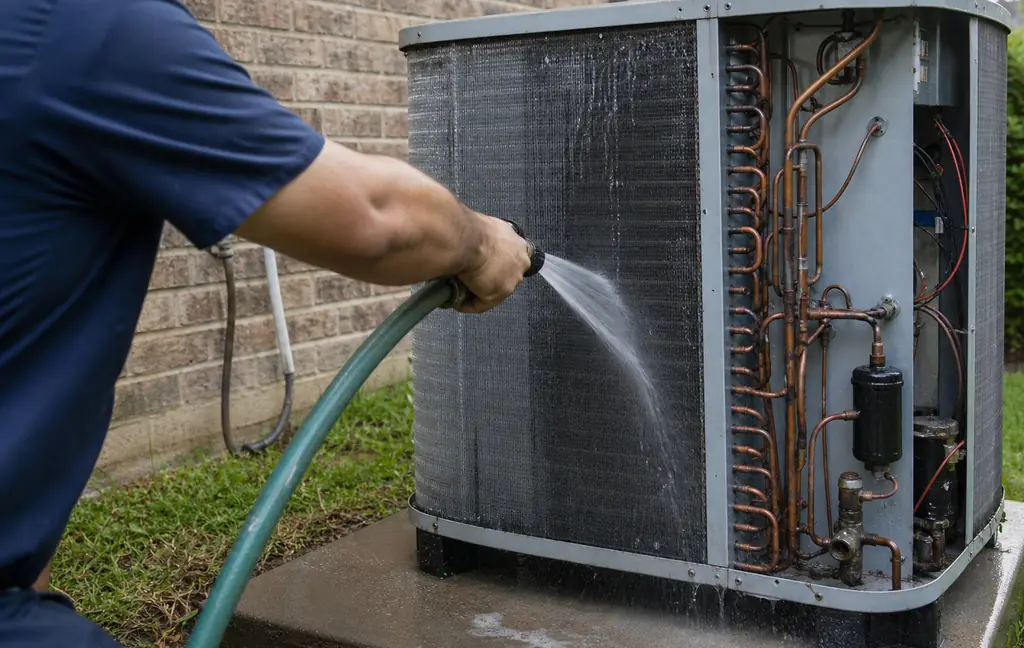
- Inspect the outdoor unit — The outdoor condenser coil needs clear airflow to release heat. Check from outside that leaves or stored items are not blocking the unit, and leave coil cleaning to a technician if the fins or coil need attention.
- Check the condensate drain — Cooling removes moisture that should flow through the condensate drain. A technician checks that the drain is not blocked and looks for signs of water around the indoor equipment; standing water or a system shutoff calls for service rather than repeated resets.
- Check electrical connections — A technician checks electrical connections and components for visible wear or looseness. Do not remove access panels or touch wiring yourself; stop using the system if you notice a burning smell or electrical problem.
- Check system operation — The technician runs the equipment and checks whether it responds to the thermostat and operates normally. Note unusual cycling, weak airflow, or a temperature that keeps rising so you can describe the symptom accurately.
- Review the system’s condition — Ask which findings are maintenance items and which indicate a fault requiring diagnosis or repair. A written, specific explanation helps you distinguish a cleaning recommendation from a part failure.
Choose a Tune-Up or Inspection Based on the Symptom
The main decision is whether the system needs preventive maintenance or has a current fault. These situations point to different starting prices and service goals.
The system runs, and you are preparing for summer
Choose a tune-up when the equipment is operating and you want it checked before sustained cooling demand. HVAC tune-ups start at $45; ask what the visit includes before scheduling.
The system has a specific problem
Choose an inspection when the AC or heating system is not cooling or heating properly, stops unexpectedly, or shows another fault. The inspection for a heating or cooling problem starts at $29 and is the diagnostic starting point, not a quoted repair total.
The unit is not operating at all
Describe what happened, whether the thermostat display is on, and whether the system makes a sound when it starts. An inspection is more useful than booking routine maintenance when the immediate concern is a breakdown.
Need help now? (469) 369-0748
Signs Your Dallas AC Needs Attention Before Peak Heat
North Texas cooling systems can face long periods of heavy use. The National Weather Service’s 1991–2020 normals put the usual July high at DFW Airport at about 96°F, so a small performance change can become more noticeable once the AC runs through hot afternoons.
- Airflow is weaker than usual — Check the filter first, then compare airflow at more than one supply register. If replacing a dirty filter does not restore normal airflow, note which rooms are affected and arrange a system check.
- The home stays warm while the AC runs — Confirm that the thermostat is set to cool and that its set temperature is below the room temperature. If the system continues running without bringing the home closer to the setting, book an inspection rather than treating it as a routine tune-up.
- Water appears near indoor equipment — Water around the indoor unit can point to a condensate drainage issue. Turn the system off if water is spreading near the equipment and arrange service; avoid opening the unit or pouring chemicals into the drain.
- A new noise or repeated start-stop pattern appears — Write down when the sound or cycling begins and whether the system still cools. A new symptom is useful diagnostic information and should be reported when requesting an inspection.
Schedule Dallas AC Maintenance Before Summer Demand
Spring is a practical time to arrange cooling maintenance before long summer run cycles begin. Heating and cooling tune-ups fit naturally in spring and fall, while an active breakdown should be treated as a problem inspection instead of waiting for a seasonal maintenance visit.
A clean, correctly installed filter is one basic homeowner check between visits. The U.S. Department of Energy’s filter guidance supports checking or replacing a dirty filter, but a filter cannot correct a blocked drain, damaged electrical part, or other equipment fault.
What to Do When a Tune-Up Finds a Fault
Maintenance can reveal a problem that needs diagnosis, but a checklist finding is not automatically a reason to replace the system. Ask what component is affected, what evidence points to the fault, and whether the recommendation is cleaning, adjustment, or repair. Keep the explanation tied to the symptom you noticed.
Do not keep resetting equipment that shuts itself off, and do not remove electrical covers or reach into the indoor or outdoor unit. Switch the system off if water is spreading or you notice an electrical warning, then arrange an inspection. For a specific AC fault, start with our HVAC tune-up service page or contact us to request service.
Need help now? (469) 369-0748
Compare the Next Step Before Booking Dallas HVAC Service
The best next step depends on whether you want maintenance, need a diagnosis, or are still gathering information. Keep the equipment’s symptoms and recent changes handy when you contact a technician.
Routine maintenance
Use this option for an operating system before the season when you expect to rely on it most. Ask which checklist tasks and any cleaning are part of the quoted tune-up.
Problem inspection
Use this option for a system that is not working as expected. Share the thermostat setting, what the equipment does when switched on, and any water, sound, or airflow changes.
Repair discussion after diagnosis
Use the inspection findings to decide what repair to authorize. Request the specific failed part or condition and the repair price before work begins; the inspection starting price is not the same as a repair quote.
Frequently asked questions
How much does an AC tune-up cost in Dallas?
An HVAC tune-up starts at $45. If the system has a heating or cooling problem that needs inspection, that inspection starts at $29; it is a diagnostic starting price, not a repair price.
What should an AC tune-up include?
ENERGY STAR’s maintenance guide lists checking and cleaning indoor and outdoor coils before cooling season, checking the condensate drain, tightening electrical connections, and checking system charge. Ask which of those tasks are included in the specific tune-up you book.
Should I book a tune-up if my air conditioner is not cooling?
Book an inspection for a system that is not cooling properly, because a fault needs diagnosis before maintenance can address it. Tell the technician whether the unit runs, whether airflow changed, and what the thermostat shows.
When should I schedule AC maintenance in North Texas?
Spring gives you a chance to check cooling equipment before the hottest months, when the AC may run for long cycles. Schedule a fall tune-up for heating equipment, and request an inspection sooner if the system develops a problem.
Arrange Your Dallas HVAC Tune-Up
Call Dallas 24 Hour HVAC at (469) 369-0748 to request maintenance or an inspection for a heating or cooling problem.