
Using Emergency Heat During a Texas Ice Storm
During a Texas ice storm, leave the thermostat on Heat and let Aux Heat run; switch to Emergency Heat only if the outdoor heat pump is damaged or not operating. Call Dallas 24 Hour HVAC at (469) 369-0748 for heat pump service; inspection is $29.
Need help now? (469) 369-0748
Should You Use Emergency Heat During an Ice Storm?
In most cases, keep your thermostat set to Heat and let the system manage its backup heat. Use Emergency Heat when the outdoor heat pump is damaged, iced over in a way that prevents operation, or no longer heating, and your system has a working backup heat source. Emergency Heat usually disables the outdoor heat pump and calls for backup heat instead.
Do not switch to Emergency Heat just because the air outside is very cold. A heat pump can still draw heat from outdoor air in cold weather, while backup heat may use more electricity. During the February 2021 winter storm, the National Weather Service recorded a low of -2°F at DFW Airport on February 16; that kind of cold can make a heat pump rely more on backup heat. The National Weather Service’s DFW winter storm record gives context for extreme local cold.
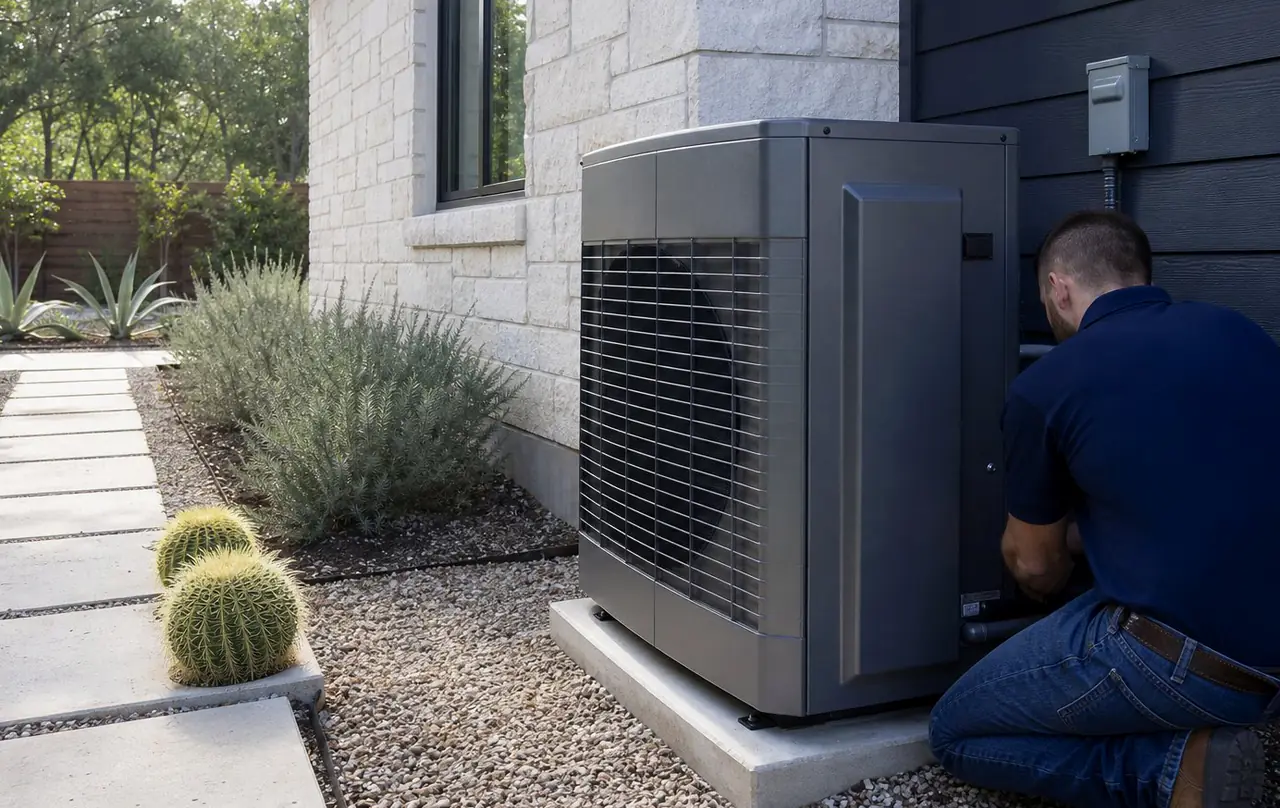
If the outdoor unit is making unusual noises, visibly damaged, or not running, avoid touching it and check the thermostat display from indoors. For a fuller explanation of what emergency heat is on a thermostat, see our related guide.
How Heat, Aux Heat, and Emergency Heat Differ on a Heat Pump
Heat
This is the normal heating setting. The heat pump moves heat indoors, and the system can bring on backup heat when it needs extra help.
Aux Heat
Auxiliary heat supports the heat pump when the thermostat calls for more heat than the outdoor unit can provide. The system may show “AUX” during a cold snap or while recovering from a large temperature setback; see what Aux Heat means.
Emergency Heat
This setting tells the system to use its backup heat without relying on the outdoor heat pump. It is a fallback for a heat pump problem, not the default setting for every freezing day.
Signs Your Heat Pump May Need Emergency Heat
Check what the system is doing before changing settings. These signs can help you decide whether to leave it on Heat, select Emergency Heat, or get professional service.
- The house keeps getting colder — Compare the thermostat reading with the room temperature after the system has had time to run. If the indoor temperature continues to fall, the heat pump may not be keeping up or the backup heat may not be working.
- The outdoor unit is damaged or will not run — Look from a safe indoor vantage point if possible. Do not touch the unit or try to chip away ice; use Emergency Heat only if your system has backup heat and the outdoor unit cannot operate.
- The thermostat displays AUX or EM — AUX generally means backup heat is assisting the heat pump. EM or Emergency Heat indicates the system is using its backup heat mode; the exact display depends on the thermostat.
- You have no power — A heat pump and its controls need electricity, so changing thermostat settings will not restore heating during an outage. Check your utility’s outage information rather than repeatedly changing modes.
Need help now? (469) 369-0748
What to Check Before Changing Heat Pump Modes
Use these indoor checks to rule out simple setting or airflow problems. Stop if you see damage, smell something unusual, or would need to open the equipment.
- Check the thermostat mode — Set the mode to Heat, not Cool or Off, and confirm the set temperature is above the room temperature. Check that the screen is on and the displayed settings match what you intended.
- Check the fan setting — Set the fan to Auto unless your system’s instructions say otherwise. Check whether the indoor blower starts when the thermostat calls for heat; a fan running without warm air needs attention.
- Inspect the air filter — Turn the system off before removing the filter. If it is heavily loaded with dust, replace it with the size and type listed on the filter slot or equipment instructions, then check whether airflow improves.
- Check supply and return vents — Make sure furniture, rugs, or curtains are not blocking room vents or the large return grille. After clearing obstructions, check whether air reaches the rooms that were cold.
- Read the thermostat message — Note any AUX, EM, or error message before resetting or changing modes. The exact display can help a technician identify whether the system is calling for backup heat or reporting a fault.
- Look at the outdoor unit only from a safe place — Check for obvious damage or an object blocking the unit, but do not touch electrical parts, remove panels, or chip at ice. If weather makes outdoor access unsafe, stay inside.
- Use Emergency Heat only when the heat pump cannot operate — If the outdoor unit is damaged or not functioning and the thermostat offers Emergency Heat, select it to use the backup system. Check whether warm air starts; if not, return to a safe setting and arrange service.
- Recheck indoor temperature — After the setting or filter check, watch the thermostat and feel the air from a nearby supply vent. If the temperature keeps dropping or the air stays cold, stop troubleshooting and request heat pump service.
What Ice on the Outdoor Heat Pump Can Mean
A light layer of frost on the outdoor coil can occur during cold, damp weather. Heat pumps periodically run a defrost cycle to clear normal frost, so a brief change in outdoor-unit sound or a pause in heating does not automatically mean the system has failed.
A unit buried by snow, coated in thick ice that does not clear, or making a harsh grinding or banging sound is different. Do not pour hot water on it, strike the coil, or pull at ice; those actions can damage parts. Keep people away from a visibly damaged unit and use Emergency Heat only if the system has that mode and backup heat.
A heat pump is one type of HVAC system, so “heat pump vs. HVAC” is not a comparison between two equivalent pieces of equipment. The important question during an ice storm is whether your heat pump is operating safely and whether its backup heat is available.
What to Do if an Ice Storm Knocks Out Power
When the power is out, the thermostat cannot make the heat pump run. Check outage updates from Oncor, which handles outages on its lines, if Oncor serves your address. Avoid running an unvented fuel-burning heater indoors, and follow its manufacturer’s safety instructions for any approved backup heating equipment.
Once power returns, set the thermostat to Heat and check that the system starts and begins warming the home. Do not switch repeatedly between Heat and Emergency Heat to force a restart. If the thermostat stays blank, the breaker trips again, or the system does not resume heating, leave electrical troubleshooting to a qualified HVAC technician.
Need help now? (469) 369-0748
When a Heat Pump Problem Calls for HVAC Service
Request service if the home continues to cool, the outdoor unit is damaged, the system repeatedly shuts off, or Emergency Heat does not produce warm air. Those symptoms can point to a heat pump, thermostat, airflow, or backup-heat problem that cannot be safely diagnosed by changing settings alone.
The phrase “HVAC vs. heat pump” mixes a broad category with one kind of heating and cooling system: a heat pump is HVAC equipment. For a problem with the heat pump itself, contact a technician who can inspect the system rather than continuing to run it through repeated resets.
We provide heat pump service for heating problems. Tell us what the thermostat displays, whether the indoor fan runs, and whether the outdoor unit appears damaged; those details help identify what needs checking.
How to Return to Normal Heat After the Ice Passes
When outdoor conditions improve and the heat pump appears undamaged, set the thermostat back to Heat rather than leaving it on Emergency Heat. Check that the outdoor unit has clear space around it without going outside during hazardous conditions, and confirm that the system starts normally.
If the thermostat continues to display an error, the outdoor unit remains iced over, or heating does not return, keep the system off if it is making unusual noises or showing visible damage. Contact us with the thermostat message and what you observed; you can contact us for heat pump service.
Frequently asked questions
What is Emergency Heat on a heat pump?
Emergency Heat is a thermostat mode that uses the system’s backup heat without relying on the outdoor heat pump. Use it when the outdoor unit cannot operate, not simply because temperatures have dropped.
Should I leave my heat pump on Emergency Heat for the whole ice storm?
Not automatically. Leave the thermostat on Heat when the heat pump is working, and let Aux Heat assist as needed; select Emergency Heat if the outdoor unit is damaged or not operating.
Why does my thermostat show Aux Heat during freezing weather?
Aux Heat means the system is calling for backup heat to help the heat pump meet the thermostat setting. If the house is still warming and the system is operating normally, the display alone does not mean the heat pump has failed.
Is HVAC or a heat pump better during a Texas ice storm?
HVAC describes heating and cooling equipment as a category, while a heat pump is one type of HVAC system. During a storm, the key issue is whether the heat pump and its backup heat are functioning, not which label is better.
Need Heat Pump Help?
Call Dallas 24 Hour HVAC at (469) 369-0748 for heat pump service.