
Dryer Taking Too Long To Dry? Check the Vent
A dryer taking too long to dry often has restricted exhaust airflow, so check the lint screen and outside vent first. Call Dallas 24 Hour HVAC at (469) 369-0748 for dryer vent cleaning if airflow remains weak.
Need help now? (469) 369-0748
Why a Dryer Taking Too Long to Dry Often Points to the Vent
A dryer needs an open path to carry warm, damp air outside. When lint, a crushed duct, or a blocked exterior hood restricts that path, moisture leaves the drum more slowly and clothes may need another cycle.
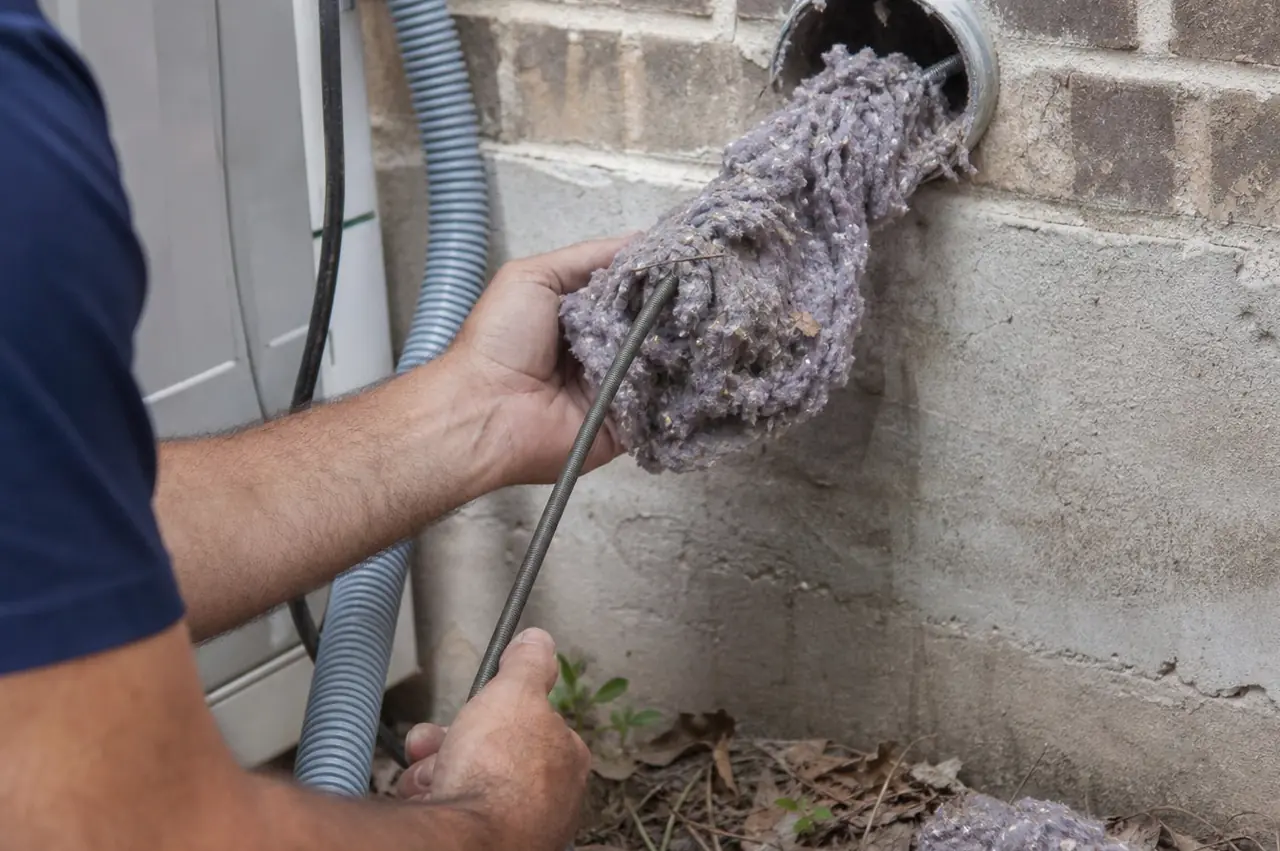
Start with the lint screen and the exhaust opening outdoors. If the screen is clean but the outside flap barely moves while the dryer runs, or you see lint packed around the hood, the vent may need attention. A hot laundry room or a dryer and clothes that feel unusually hot are also reasons to stop the cycle and inspect the airflow.
The National Fire Protection Association says failure to clean is the leading cause of home clothes dryer fires. Its safety guidance recommends cleaning the lint filter with every load and having the vent cleaned about once a year, sooner when clothes take longer than usual to dry.
What to Check Before Cleaning a Slow-Drying Dryer Vent
A few simple checks can help you tell whether the vent is the likely cause or whether the problem may be elsewhere.
- Lint screen — Remove lint after each load. If fabric softener residue has coated the screen, wash it with water and a soft brush, then let it dry fully before putting it back.
- Outside exhaust hood — With the dryer running, look from outdoors to see whether the flap opens and air moves out. Keep hands and tools clear of the opening while the dryer is on.
- Duct behind the dryer — Look for a crushed, sharply bent, or disconnected duct. A tight bend can restrict airflow even when the visible section looks clean.
- Load and cycle — Try a smaller load and confirm the selected cycle matches the fabric. A packed drum can slow drying, so compare the result with a normal-sized load.
- Dryer behavior — Notice whether the drum heats and turns as expected. If exhaust airflow seems strong but clothes still stay damp, a dryer fault may need appliance service rather than vent cleaning.
How to Check and Clean the Accessible Dryer Vent Safely
Only work on sections you can reach safely without climbing, forcing the dryer, or taking apart the appliance. Stop if the duct is damaged, hidden in a wall or ceiling, or difficult to disconnect.
- Stop the dryer and disconnect power — Turn the dryer off and unplug it before moving it or working behind it. Do not reach into a running dryer or put a brush through a vent while the appliance is operating.
- Clean the lint screen — Pull out the screen and remove the lint by hand. If residue remains, wash the screen with mild soap and water, rinse it, and let it dry completely; check that it fits back into its slot.
- Check the outside hood — Look for lint, leaves, or other visible blockage around the exhaust opening. Remove loose debris you can reach from the ground, and check that the flap can move freely.
- Inspect the short duct section — Carefully move the dryer only as far as needed to see the duct. Check for crushing, a sharp bend, a loose connection, or visible lint buildup; do not pull on wiring or other appliance connections.
- Clean only reachable ductwork — Use a dryer-vent brush or vacuum attachment made for this task on accessible sections. Work gently so you do not puncture the duct or push lint deeper, and remove loosened lint rather than leaving it inside.
- Reconnect and check the route — Fit the duct securely and make sure it is not pinched when you return the dryer to position. Check behind the appliance again before restoring power.
- Test the exhaust — Run a short cycle and check the exterior hood from outdoors. The flap should open and air should discharge; stop the dryer if airflow remains weak, the duct shifts, or you notice unusual heat.
Need help now? (469) 369-0748
Choose DIY Checks or Professional Dryer Vent Cleaning
A visible lint screen or loose debris at a ground-level exhaust hood may be manageable at home. Cleaning the full route is different: long, hidden, or sharply routed ductwork can hold lint beyond reach, and aggressive brushing can damage a duct.
DIY check fits a small, reachable issue
Clean the lint screen, clear loose debris at an accessible outdoor hood, and inspect the short duct behind the dryer. This is a reasonable first step when the duct is visible and intact.
Professional cleaning fits persistent weak airflow
Choose professional cleaning when clothes still take extra cycles, the outside flap barely opens, or lint appears deep in a duct you cannot reach safely. Our dryer vent cleaning service starts at $65.
Appliance service fits a different symptom
If the vent has strong airflow but the dryer will not heat, tumble, or complete a cycle, the appliance itself may need diagnosis. Vent cleaning cannot repair a failed dryer component.
When a Slow Dryer Vent Needs a Technician
Stop using the dryer and arrange an inspection if the appliance or nearby laundry area becomes unusually hot, the duct is crushed or disconnected, or you find heavy lint buildup beyond the sections you can reach. Do not keep running repeated cycles to compensate for weak exhaust; that adds operating time without removing the blockage.
Call an HVAC technician for a vent route that disappears into a wall, floor, ceiling, or attic, or when a brush cannot pass without force. A technician can clean the inaccessible route and check that the duct connects to the outdoor exhaust. If the vent is clear but the dryer still performs poorly, contact an appliance repair service instead.
How Often to Clean a Dryer Vent That Is Slow to Dry
Do not wait for a full blockage to set a cleaning schedule. The NFPA recommends vent cleaning about once a year, and sooner when clothes take longer than usual to dry; clean the lint filter after every load. Frequent laundry, a long duct route, or a recurring drop in exhaust flow can make an earlier check sensible.
Use the change in drying time as a warning sign rather than assuming the dryer needs replacement. For a fuller schedule guide, see how often to clean your dryer vent.
Need help now? (469) 369-0748
What Dryer Vent Cleaning Costs in Dallas
Our dryer vent cleaning starts at $65. The work needed can depend on how long the duct is, how accessible it is, and how much lint has collected, so the starting price is not a quote for every setup.
For comparison, Angi’s published Dallas estimates list a typical range of $103–$208 and an average of $154; actual job prices vary. You can read more about dryer vent cleaning cost and what can affect the amount.
Frequently asked questions
Can I clean my dryer duct myself?
You can clean the lint screen and remove loose debris from a reachable outdoor hood, then inspect the short duct behind the dryer with the power disconnected. Leave long, hidden, damaged, or hard-to-reach ductwork to a technician rather than forcing a brush through it.
How often should a dryer vent be cleaned?
The NFPA recommends having the vent cleaned about once a year and sooner if clothes take longer than usual to dry. Remove lint from the screen after every load and pay attention to any new drop in airflow.
How much does dryer vent cleaning cost?
Our dryer vent cleaning starts at $65. Angi’s published Dallas estimates show a typical market range of $103–$208, but the job setup and amount of buildup affect the final price.
What if the vent is clear but the dryer still takes too long?
Check that the load is not too large and that the selected cycle fits the fabric. If exhaust airflow is strong but the dryer still will not heat or tumble properly, contact an appliance repair service because vent cleaning will not fix an appliance fault.
Get the Dryer Vent Checked
Call Dallas 24 Hour HVAC at (469) 369-0748 to arrange dryer vent cleaning.