
How to Clean an Evaporator Coil
You can clean an evaporator coil only when you can safely access it after shutting off power; otherwise, leave the cabinet closed for an HVAC technician. Call Dallas 24 Hour HVAC at (469) 369-0748 for an inspection.
Need help now? (469) 369-0748
How to Clean an Evaporator Coil When Dirt Is the Problem
An evaporator coil sits inside your indoor air handler or furnace cabinet. As warm household air passes over its cold surfaces, dust and grime can collect on the fins and restrict airflow. Cleaning is useful when you can see dirt on the coil, but it will not fix every cooling problem.
Start with the air filter: a clogged filter can reduce airflow and should be replaced or cleaned according to its instructions. The U.S. Department of Energy says a clean or replaced filter can lower an air conditioner’s energy use by 5 to 15 percent. A dirty filter may be the real issue even when the coil looks dusty.
Check the coil only if you can reach it without disturbing wiring or forcing open a cabinet. For a deeper clean or an obstructed coil, use an evaporator coil cleaning service rather than risking damage to the fins or electrical parts.
Choose DIY Cleaning or HVAC Service by What You Can Safely Reach
A light layer on an accessible coil
A homeowner can remove loose surface dust with a soft brush when the system is off and the coil face is safely accessible. Stop if the cabinet opening exposes wiring, the coil is wet, or reaching it requires force.
Packed dirt or a hard-to-reach coil
Choose professional service when buildup covers the fins, dirt extends deep into the coil, or the panel cannot be opened safely. Cleaning the visible edge alone may leave the obstructed area untouched.
Visible suspected mold or recurring moisture
Do not brush or spray suspected growth while the system is running. The EPA advises fixing the moisture source first and says an HVAC system with mold should not be run through the home; read the EPA’s mold cleanup guidance before deciding what to do next.
Gather Coil-Safe Supplies Before Opening the Indoor Unit
Use supplies made for gentle cleaning, and read each product label before it goes near the coil. Do not substitute a household cleaner just because it is already under the sink.
- Soft nylon brush — Use it to lift loose dust with light strokes in the direction of the fins. A stiff or wire brush can bend the thin metal.
- Indoor-coil cleaner — Choose a product labeled for indoor evaporator coils and follow its directions, including whether rinsing is required. Keep it away from wiring, motors, and other components.
- Work gloves and a flashlight — Gloves help protect your hands from sharp cabinet edges, and a flashlight lets you check the coil face without reaching blindly into the unit.
- A clean replacement filter, if needed — Match the size and airflow direction marked on the old filter or filter slot. A new filter will not clean a dirty coil, but it can keep loose household dust from immediately collecting again.
Need help now? (469) 369-0748
Follow These Steps to Clean an Accessible Evaporator Coil
Do not continue past a step if access feels unsafe, a panel will not open normally, or you see damaged wiring. Leave concealed or difficult cleaning to an HVAC technician.
- Turn cooling off at the thermostat — Set the system to off before approaching the indoor unit. Check that the indoor fan has stopped so air is not pulling dust across the coil while you work.
- Shut off power to the indoor unit — Use the labeled breaker or disconnect for the HVAC equipment and confirm the unit is not operating. Do not touch wiring or electrical terminals; stop if you cannot identify the correct power control.
- Find the coil access panel — Use the equipment information or visible cabinet layout to locate the indoor coil. Open only a normal access panel you can handle safely; stop if the panel is sealed, stuck, or exposes components you would need to move.
- Inspect before brushing — Shine a flashlight across the fins and look for loose dust, thick buildup, bent fins, standing water, or suspected growth. If you see damaged parts or moisture that keeps returning, do not treat brushing as the repair.
- Brush loose dust gently — Use a soft nylon brush and light strokes along the fins. Check the area after each pass; stop if the fins bend, debris is packed in, or you cannot reach the dirty section without pressure.
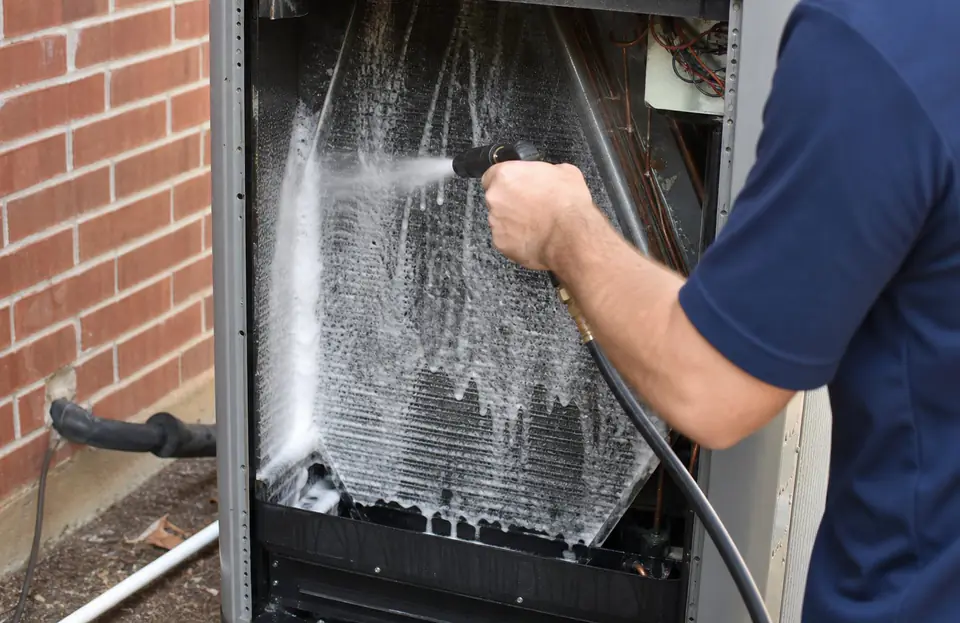
- Apply cleaner only as its label allows — Use an indoor-coil cleaner according to the product directions and keep spray away from wiring and motors. Check the label for whether the product is no-rinse or requires rinsing; never guess.
- Check the drain area without forcing a flush — Look for water collecting beneath the coil or signs that the condensate drain is blocked. Do not pour water into the cabinet if you cannot see where it will go; a backed-up drain needs separate attention.
- Close the panel and check operation — Put the access panel back in place, install a clean filter with its airflow arrow pointing the right way, and restore power. Check that the fan runs normally and that no water appears around the indoor unit.
Avoid Fin Damage, Electrical Contact, and a Missed Drain Problem
A pressure washer, stiff brush, or forceful vacuum can bend fins and make airflow worse. Avoid bleach, acids, and general-purpose degreasers unless the equipment or cleaner instructions specifically allow them for that coil; use only a product labeled for indoor evaporator coils.
Do not assume that visible dirt is the only cause of weak cooling. A dirty filter, a drain problem, an airflow restriction, or an equipment fault can produce overlapping symptoms, so a coil cleaning alone may not resolve the issue. If the system still does not cool normally after a safe surface clean, turn it off and arrange an HVAC inspection.
ENERGY STAR’s maintenance checklist includes cleaning indoor and outdoor coils before the cooling season and checking the condensate drain. Its guidance is useful for timing a maintenance check, but it does not mean every cooling problem calls for coil cleaning.
Tell the Indoor Evaporator Coil Apart From the Outdoor Condenser Coil
Evaporator coil: inside
The evaporator coil is in the indoor air handler or furnace cabinet. It is the coil this guide covers, and its access may be limited by the equipment cabinet.
Condenser coil: outside
The condenser coil surrounds or sits within the outdoor unit. It is exposed to outdoor debris and is not the same component as the indoor evaporator coil; see this guide to evaporator coil vs condenser coil if you are unsure which part you are viewing.
Why the distinction matters
A cleaning method or access point for one coil does not automatically apply to the other. Confirm which unit you are inspecting before removing a panel or applying cleaner.
Need help now? (469) 369-0748
Call an HVAC Technician When the Coil Is Buried or the Problem Returns
Call for service when the coil is behind a panel you cannot safely open, buildup reaches deep between the fins, fins are damaged, or water keeps collecting near the unit. A technician can assess whether the coil needs cleaning or whether airflow, drainage, or another equipment issue needs attention.
Dallas 24 Hour HVAC lists evaporator coil cleaning from $139 and a $29 inspection for a heating or cooling problem. The inspection and cleaning are separate listed prices; see the current AC coil cleaning cost guide for additional context on pricing.
Check the Evaporator Coil Before Dallas Cooling Season
Dallas cooling systems face their heaviest demand in summer, so checking the filter and visible coil condition in spring can reveal buildup before long cooling cycles begin. If the coil is clean and accessible, leave it alone rather than applying cleaner without a reason.
For ongoing maintenance, follow the equipment maker’s filter and service instructions and note any repeat signs such as standing water or dust that quickly returns. Dallas 24 Hour HVAC is open 24 hours a day, 7 days a week; owner Michael Anderson has 28 years of heating and air conditioning experience.
Frequently asked questions
Can I clean an evaporator coil without removing it?
You can brush loose dust from a coil face only when it is safely accessible with the system powered off. Do not force a panel, reach past wiring, or assume a surface clean will remove buildup deep between the fins.
What cleaner should I use on an evaporator coil?
Use a cleaner labeled for indoor evaporator coils and follow its directions for application and rinsing. Avoid household bleach, acids, and general-purpose cleaners unless the product and equipment instructions specifically allow them.
How often should an evaporator coil be cleaned?
Check the coil during routine maintenance, especially before the cooling season, and clean it when it has visible buildup. ENERGY STAR includes indoor coil cleaning in its pre-season maintenance checklist; that does not mean a clean coil needs repeated chemical treatment.
When should I stop cleaning and call an HVAC technician?
Stop if the coil is hard to access, the fins are damaged, dirt is packed deep between them, or water keeps collecting near the unit. Call for an inspection if cooling remains weak after you replace or clean the filter and address only the loose, accessible dust.
Need Evaporator Coil Cleaning?
Call Dallas 24 Hour HVAC to arrange an inspection or ask about evaporator coil cleaning.