
Dryer Vent Cleaning Cost
Dryer vent cleaning starts at $65. Call (469) 369-0748 to arrange service; the final cost can depend on the vent layout, access and lint buildup.
Our Starting Prices in Dallas
| Service | Price |
|---|---|
| Air Duct Cleaning | from $85 per HVAC unit |
| Dryer Vent Cleaning | from $65 |
| AC Repair | $29 inspection |
| Blower Cleaning | from $69 |
| Evaporator Coil Cleaning | from $139 |
| HVAC Mold Cleaning | from $89 |
| Duct Sanitizing | from $65 |
| Blown-In Insulation | from $0.89 per square foot |
| AC Capacitor Replacement | from $125 |
| Refrigerant Recharge | from $59 per pound |
| Condensate Drain Line and Float Switch | from $69 |
| Emergency AC Repair | $29 inspection |
| Furnace Repair | $29 inspection |
| Heat Pump Service | $29 inspection |
| HVAC Tune-Up | from $45 |
Need help now? (469) 369-0748
What Dryer Vent Cleaning Cost Covers
Our starting price for dryer vent cleaning is $65. The final amount can vary with the length and route of the vent, how easy it is to reach, and how much lint has collected. Ask what the service covers for your dryer and vent before work begins.
A dryer vent carries warm, moist air and lint from the appliance to an outdoor outlet. Cleaning the lint screen after each load helps, but it does not clear lint that builds up farther inside the vent.
This is different from air duct cleaning: dryer vent cleaning focuses on the exhaust path for one dryer. Read about our dryer vent cleaning service to see the service details, or check our prices for other listed services.
What Can Change a Dryer Vent Cleaning Job
The vent’s route and condition matter more than the dryer’s age when estimating the cleaning work. Use these details to describe what you see when you call.
- Vent length and bends — A long route or several turns can make the full exhaust path harder to access than a short, direct connection. Note whether the vent runs through a wall, floor, attic or roof.
- Access to the outlet — The outside vent may be at ground level or high on a wall or roof. Tell us where it exits so the job can be understood before service is arranged.
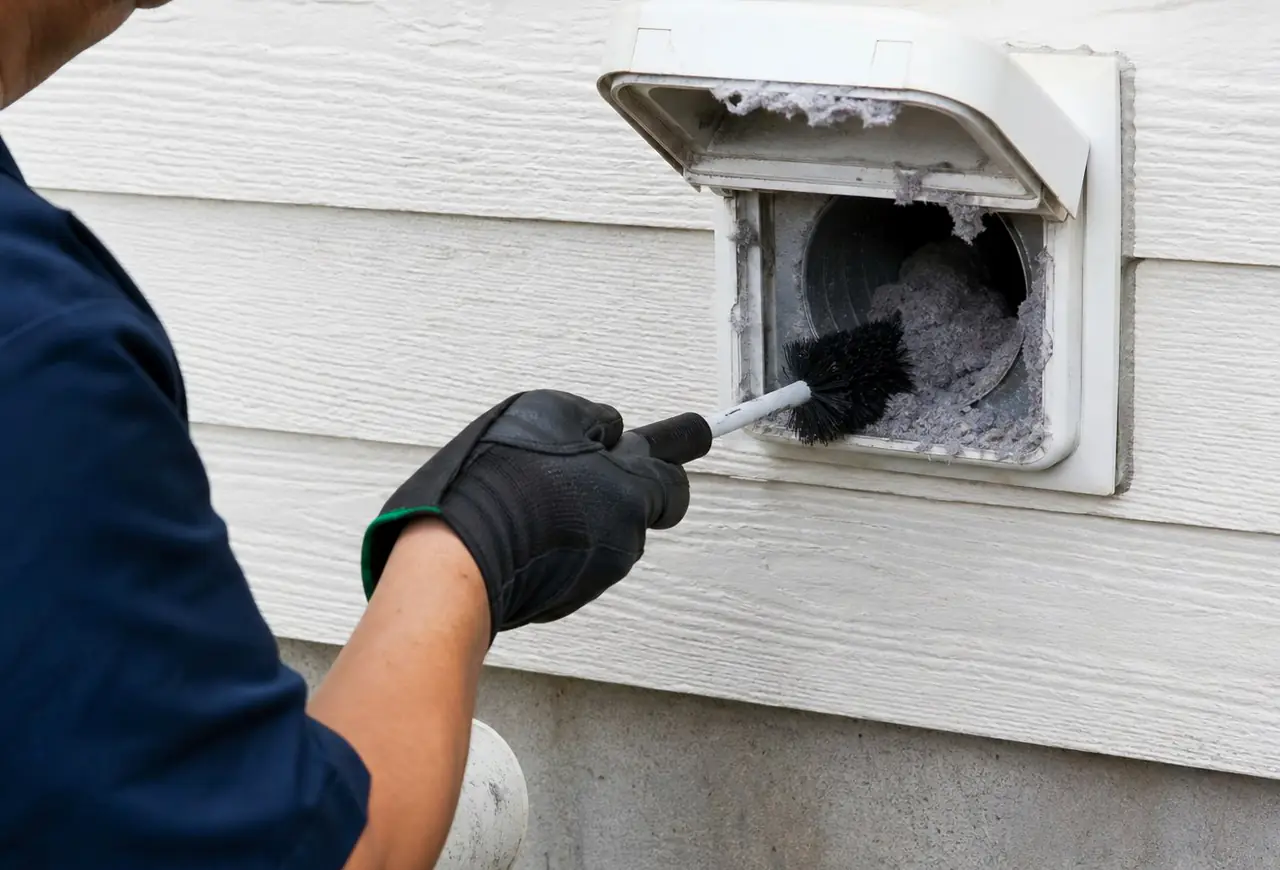
- Lint buildup — A thick mat of lint at the outlet, or drying that has gradually slowed, can point to a restriction farther along the route. Mention how long clothes take to dry compared with their usual cycle.
- More than one dryer — Cleaning applies to a particular appliance and its exhaust vent. Tell us how many dryers need service rather than assuming one starting price covers multiple vents.
Which Dryer Vent Cleaning Option Fits Your Situation
A quick lint-screen check handles routine upkeep, but it cannot substitute for clearing lint from the full exhaust route. Choose the next step based on where the buildup appears and whether drying performance has changed.
Lint on the screen only
Remove lint from the screen after every load and check that it sits back in place. If clothes dry normally and the outside outlet is clear, keep up this routine and watch for a change.
Lint at the outlet or slower drying
Arrange vent cleaning when lint is visible at the exterior opening or loads take longer than they used to. The dryer taking too long to dry? Check the vent guide covers that warning sign.
Damage, a crushed hose or a loose connection
Stop using the dryer if the vent hose is visibly damaged, disconnected or sharply crushed. Have the vent connection corrected before running another load; cleaning alone does not repair a broken part.
Need help now? (469) 369-0748
Signs Your Dryer Vent May Need Cleaning
Clothes taking longer than usual to dry is a practical reason to check the exhaust path. The lint screen can look clean while lint remains in the hose or vent beyond the dryer.
Also look for lint around the outdoor vent opening, a flap that does not open freely when the dryer is running, or a dryer and laundry area that feel unusually hot. Stop the dryer if you notice a burning smell or smoke; do not keep running loads to see whether the problem clears.
The National Fire Protection Association says failure to clean is the leading cause of home clothes dryer fires. It recommends cleaning the lint filter with every load and having the vent cleaned about once a year, sooner if clothes take longer than usual to dry. See the NFPA dryer safety tips.
Safe Dryer Vent Checks You Can Do at Home
These checks can help you describe the problem, but they do not replace cleaning the full vent. Do not reach deep into the duct or climb to an unsafe outlet; arrange service if access or the condition is uncertain.
- Stop the dryer — Turn the dryer off before checking the lint screen or visible hose. If you need to move the appliance to see behind it, do not pull on the vent connection or electrical cord.
- Clean the lint screen — Remove the screen and clear off the lint by hand. Check that the screen is not torn and that it slides back into its slot without catching.
- Look into the screen slot — Use a flashlight to look for loose lint just inside the opening. Remove only lint you can reach safely without forcing a tool into the dryer; check that the slot is clear at its entrance.
- Inspect the visible vent hose — Look behind or beside the dryer only where you can see without straining. Check for a crushed, disconnected or torn hose, and note whether the connection appears loose.
- Observe the outdoor outlet from a safe spot — Check the visible vent hood for lint buildup or an obstruction without reaching inside or climbing. Note whether the outlet flap appears blocked or damaged.
- Compare drying time — Pay attention to whether a familiar load now needs more time or another cycle. A new slowdown is useful information to share when arranging cleaning.
- Stop when the route is hidden or unsafe — Do not dismantle a vent that runs through a wall, ceiling or roof just to inspect it. Tell the service provider where the vent appears to travel and which warning signs you found.
How the Starting Price Fits Common Dryer Vent Situations
For a household with one dryer and a vent that needs routine cleaning, the service starts at $65. The same starting price is the reference point if you see lint at the outlet or drying has slowed; the route and access still affect the work involved.
A damaged or disconnected hose is a different problem from lint buildup. Cleaning does not fix a damaged connection, so report what you found before arranging service and do not run the dryer until the vent is safely connected.
For multiple dryers, describe each appliance and vent separately. This helps clarify what needs cleaning rather than treating the starting price for one service as a total for every vent.
Need help now? (469) 369-0748
What to Check After Dryer Vent Cleaning
After service, check that the visible hose remains connected and is not crushed behind the dryer. Run a normal load and compare drying time with the cycle that first raised concern; a persistent slowdown can point to another issue with the appliance or vent.
Keep clearing the lint screen after each load, even when the vent has been cleaned. If you want a routine interval, the NFPA guidance is about once a year, with cleaning sooner when drying takes longer than usual; this is a useful reference, not a substitute for responding to a new warning sign.
For a vent that is damaged, inaccessible or still showing restricted airflow after cleaning, do not keep running repeated cycles. Call an HVAC professional to assess the vent route, and use our contact page to arrange service.
Frequently asked questions
How often should a dryer vent be cleaned?
The NFPA recommends having the vent cleaned about once a year, sooner if clothes take longer than usual to dry. Clear the lint filter after every load, and treat a sudden change in drying time as a reason to check the vent sooner.
Does cleaning the lint screen clean the whole dryer vent?
No. The lint screen catches lint near the dryer, while lint can also collect in the hose and the longer exhaust route to the outside. A clean screen does not confirm that the full vent is clear.
Can I clean a dryer vent myself?
You can clear the lint screen and inspect visible parts of the hose and outdoor outlet from a safe position. Do not reach deep into a hidden vent or climb to an unsafe outlet; arrange professional cleaning when the route is inaccessible or drying remains slow.
What should I do if clothes still take too long to dry after vent cleaning?
Check that the visible hose is connected and not crushed, then compare drying time with a normal load. If the slowdown continues, the dryer or a less accessible part of the vent may need attention, so stop relying on repeated cycles and arrange an assessment.
Arrange Dryer Vent Cleaning
Call (469) 369-0748 to arrange dryer vent cleaning starting at $65.